


Views: 0 Author: Site Editor Publish Time: 2026-03-24 Origin: Site


Have you lost most or all teeth in one arch? Are you looking for a fixed option that feels secure? Could a Malo Bridge be the answer? It is supported by dental implants for better stability. In this article, you will learn how it works. You will also see why many patients choose it.
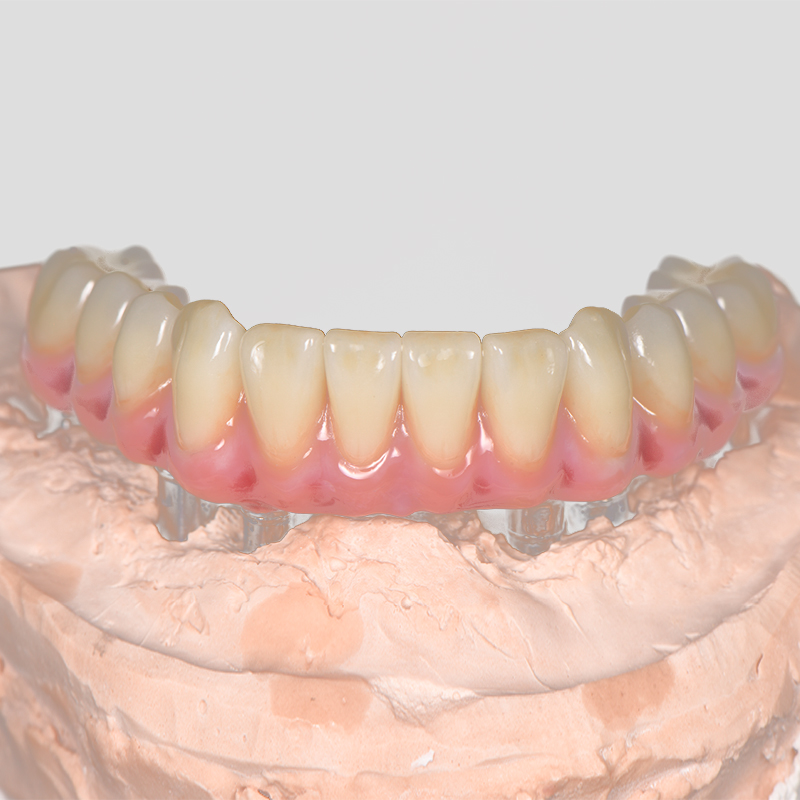
A Malo Bridge is a fixed full-arch implant restoration that replaces most or all teeth in the upper or lower jaw. It is often described as an implant-supported dental arch because it restores an entire row of teeth on a limited number of implants. In many cases, four to six implants are used to support the final bridge, which allows the treatment to restore many teeth without placing one implant for every missing tooth.
The concept is closely linked to Professor Paulo Malo, a Portuguese implant expert known for developing advanced full-arch implant approaches. For that reason, the term Malo Bridge is often associated with the broader All-on-4 philosophy, though in many product and lab contexts it refers more specifically to a premium full-arch prosthetic design. Its core idea is clear: use fewer implants to support more teeth, while creating a fixed restoration that looks natural and feels stable.
This matters because a Malo Bridge is not the same as a conventional removable denture. Dentures sit on the gums and may move during chewing or speaking. A Malo Bridge is fixed onto implants, so it provides stronger support and greater everyday comfort. It is also designed to restore not only teeth, but often part of the soft tissue contour as well, which helps create a fuller and more lifelike final appearance.
In the product information provided by Shenzhen Lezy Jumei Dental Medical Co., the Malo Bridge is described as a high-end implant restoration technology and an advanced form of implant-supported fixed dentures. That description fits well with how many clinics explain it to patients: it is a full-arch solution for people with significant tooth loss who want a fixed, esthetic, long-term restoration.
A Malo Bridge works by combining dental implants, a full-arch prosthetic framework, and a customized visible bridge into one complete restoration system. The implants act as artificial tooth roots. They are placed into the alveolar bone in strategic positions, usually with a mix of vertical and angled placement. This approach helps maximize the available bone and may reduce the need for more invasive grafting procedures in some patients.
After the implants are placed, the bridge is connected to them through a fixed prosthetic structure. In practical terms, the implants create the base, while the bridge restores the visible teeth and part of the gum profile. Once completed, the result is a stable full-arch restoration that helps the patient chew, speak, and smile more naturally.
One important reason the Malo Bridge became so well known is the principle of “less implants, more teeth restoration.” Instead of placing eight, ten, or twelve implants for a full arch, the dentist may place only four to six implants and still support a complete dental bridge. This makes the treatment more efficient while still offering strong fixed support.
Healing is also part of how it works. In many cases, a temporary bridge is placed first. This provisional restoration allows the patient to function during the healing stage, while the implants bond with the surrounding bone in a process called osseointegration. After healing, the final bridge is made and delivered. This two-stage process is common because it improves both stability and accuracy.
The product description from Shenzhen Lezy Jumei Dental Medical Co. adds another useful detail here. Its Malo Bridge is presented as a cement-retained full-arch implant bridge, manufactured through CAD/CAM engineering for predictable fit and supported by a structure designed to hold individual ceramic crowns. That design is important because it supports future maintenance and helps simulate the look of natural dentition more closely than some older monolithic designs.
Component | Main Role |
Dental implants | Anchor the restoration inside the jawbone |
Strategic implant angulation | Uses available bone more efficiently |
Temporary bridge | Supports function during healing |
Final full-arch bridge | Restores teeth, smile, and daily comfort |
Individual ceramic crown design | Improves esthetics and simplifies future repair |
A Malo Bridge is usually recommended for patients who have lost most or all teeth in one arch. It is especially useful for people with half-mouth or full-mouth tooth loss who want a fixed solution instead of a removable prosthesis. Since it restores many teeth with a smaller number of implants, it is often considered practical for patients who need broad rehabilitation but want to avoid more complex implant placement.
It may also suit patients who have limited alveolar bone conditions. Strategic implant placement, including tilted posterior implants in many cases, can make this option more achievable even when bone quantity is not ideal. This does not mean every patient with bone loss is automatically a candidate, but it does explain why the Malo Bridge is often discussed as a solution for challenging full-arch cases.
Another common candidate group is people who are unhappy with dentures. Many denture wearers complain about movement, discomfort, reduced chewing power, or embarrassment in social situations. A Malo Bridge is fixed, so it usually gives them a stronger sense of stability and confidence. Patients who want a more natural-looking and more secure alternative often find this option appealing.
At the same time, a good candidate still needs proper evaluation. Gum health, bite force, medical status, smoking habits, and oral hygiene all matter. A premium bridge cannot compensate for poor planning or poor maintenance. This is why clinics must assess the patient carefully before deciding whether a Malo Bridge is the right full-arch solution.
The treatment process for a Malo Bridge starts with consultation, diagnosis, and digital planning. The dentist reviews the patient’s oral condition, bone support, facial needs, and esthetic goals. Imaging such as CBCT scans and digital impressions is often used to plan implant placement more accurately. At this stage, the team also decides whether the case will need extraction, grafting, or any special restorative preparation.
The next step is implant placement. In a typical full-arch case, four to six implants are inserted in carefully selected positions. Some are placed vertically, while others may be tilted to avoid weaker bone areas or important anatomical structures. This helps create a stable base for the future bridge.
After surgery, the patient may receive a temporary bridge. This provisional stage allows the patient to function while healing takes place and also helps the clinic evaluate speech, esthetics, and comfort before the final restoration is made. The implants then need time to integrate with the jawbone.
Once healing is complete, the final Malo Bridge is fabricated and fitted. This is where precise production becomes especially important. Shenzhen Lezy Jumei Dental Medical Co. states that its Malo Bridge uses advanced CAD/CAM technology to produce a predictable fit and high esthetic quality. The company lists an in-lab production time of 6 working days and a total turnaround of about 9 to 12 days from case submission to delivery, which is relevant for clinics trying to plan treatment schedules efficiently.
Because the final prosthesis is designed as a premium custom product, the fitting stage involves checking bite, smile line, tissue support, and overall comfort. Once adjusted properly, the bridge becomes the patient’s fixed full-arch restoration.
A Malo Bridge is often compared with removable dentures, standard acrylic All-on-4 bridges, and other fixed implant-supported prostheses. These comparisons help explain why this solution is usually seen as a high-end full-arch option.
Compared with traditional dentures, a Malo Bridge is fixed in place and supported by implants. That means it generally offers better chewing stability, stronger speech support, and more daily confidence. Dentures may still work as an entry-level or lower-cost option, but they do not usually feel as secure or function as naturally.
Compared with basic acrylic full-arch bridges, a Malo Bridge is often positioned as a more durable and more refined solution. Acrylic designs may cost less at the start, but they can wear faster, fracture more easily, and sometimes require more maintenance over time. A Malo Bridge, especially one built on titanium and ceramic, is often chosen for longer service life and stronger esthetic results.
Compared with other implant-supported full-arch prostheses, the Malo Bridge stands out for its focus on complete rehabilitation. It is not only about replacing teeth. It also aims to restore soft tissue contour, facial appearance, and long-term function. This gives it value in more demanding cases where both esthetics and structural support matter.
Shenzhen Lezy Jumei Dental Medical Co. reinforces this premium positioning in its product description. It highlights biocompatible titanium and ceramic, VITA shade customization, and a structure designed for individual ceramic crowns. That combination supports both high esthetics and easier long-term repair, which makes the bridge appealing to practices that want a full-arch solution with both visual quality and service convenience.
Full-Arch Option | Main Strength | Main Limitation |
Traditional denture | Lower initial cost | Removable and less stable |
Acrylic All-on-4 bridge | Faster and more affordable entry point | More wear and repair over time |
Malo Bridge | Fixed, esthetic, durable, maintainable | Higher initial investment |
Material choice plays a major role in how a Malo Bridge performs. Strength, esthetics, repairability, hygiene, and patient comfort are all influenced by the design and the materials chosen for the final prosthesis.
One major material in modern Malo Bridge design is titanium. Titanium is strong, lightweight, and biocompatible, which makes it ideal for implant-supported frameworks. It provides a stable structural base for long-span full-arch restorations and supports a more precise fit when produced through digital CAD/CAM workflows.
Another key material is ceramic. Ceramic helps create a natural-looking tooth surface and supports the esthetic demands of premium full-arch rehabilitation. In the information you provided, Shenzhen Lezy Jumei Dental Medical Co. describes its Malo Bridge as using high-grade biocompatible titanium and ceramic, combined with a full range of VITA shades for customized esthetics. This supports the idea that the bridge is not just strong, but also designed to look lifelike in the mouth.
Acrylic-based solutions still exist in the market, but they are often seen as more economical rather than more durable. They may be useful in certain temporary or lower-budget cases, but they generally do not offer the same long-term performance as titanium-and-ceramic designs.
Dentists and labs usually choose materials based on several factors:
● bite force
● esthetic demands
● repair needs
● span length
● budget
● long-term maintenance goals
A Malo Bridge offers several practical and esthetic advantages. The first is fixed support. Because it is attached to implants, it allows the patient to eat, speak, and laugh without the movement commonly associated with removable prosthetics. This can have a major effect on confidence and daily comfort.
The second is esthetic rehabilitation. A well-designed Malo Bridge restores more than teeth alone. It can also rehabilitate part of the soft tissue contour, which helps create a fuller, more natural smile. This is especially important in cases where long-term tooth loss has changed the appearance of the gums and facial support.
Another important benefit is long-term comfort and health. When the bridge is well designed, it offers strong function while using highly biocompatible materials. The product information you shared highlights this clearly by describing the Malo Bridge as a solution that improves mastication, phonetics, hygiene, and patient well-being.
A fourth benefit is easier future maintenance. Shenzhen Lezy Jumei Dental Medical Co. notes that its bridge structure is designed to support individual ceramic crowns, which makes repairs more straightforward if any local issue appears later. This is a meaningful advantage because many full-arch systems become costly and inconvenient when the whole prosthesis must be remade for a limited defect.
From the B2B perspective, the bridge also offers workflow value. The company positions itself as a trusted outsourcing partner for custom-made prosthetics and supports practices seeking predictable digital production, certified materials, and strong esthetic outcomes.
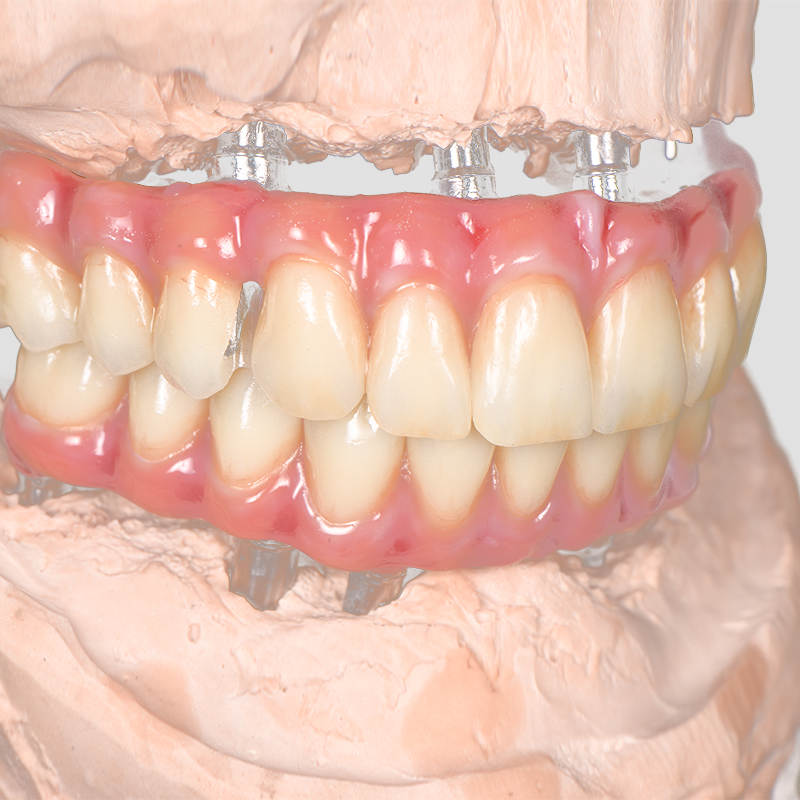
A Malo Bridge is a premium restoration, so it usually comes with a higher initial cost than basic dentures or simpler full-arch alternatives. That cost reflects surgery, digital planning, custom prosthetic design, premium materials, and laboratory precision. For this reason, it is more accurate to present it as a long-term investment rather than a low-cost replacement option.
Not every case is immediately ready for treatment. Some patients may need additional preparation because of severe bone loss, medical limitations, heavy grinding, or poor oral hygiene. Others may need time to adapt to the treatment timeline and the maintenance requirements.
Long-term care is also essential. A fixed bridge is not maintenance-free. Patients still need to clean around it carefully, attend professional checkups, and protect it from habits that may reduce its lifespan. Even high-quality materials need good daily care.
On the supplier side, after-sales support also matters. Shenzhen Lezy Jumei Dental Medical Co. offers a 2-year manufacturer’s warranty for its Malo Bridge product and states that it provides a remake free of charge if the issue comes from its side. That kind of policy adds practical value for dental professionals because it reduces outsourcing risk and supports more confident case planning.
A Malo Bridge is a fixed full-arch solution for major tooth loss. It uses four to six implants to restore function, stability, and a natural smile.Shenzhen Lezy Jumei Dental Medical Co., Ltd. adds value through CAD/CAM precision, certified titanium and ceramic materials, custom VITA-shade esthetics, and reliable outsourcing support.
A: A Malo Bridge is a fixed full-arch restoration supported by four to six implants.
A: A Malo Bridge attaches to implants and restores chewing, speech, and smile stability.
A: It stays fixed, feels more secure, and usually offers better comfort and function.
A: Cost varies by implants, materials, case complexity, and the final bridge design.


