


Views: 0 Author: Site Editor Publish Time: 2026-08-09 Origin: Site


Patient dissatisfaction in prosthodontics often stems from inadequate stability, compromised phonetics, and retention failure under dynamic masticatory forces. When a patient receives a prosthesis that shifts during function, the clinical outcome is compromised, regardless of how well the acrylic base or prosthetic teeth are finished. The primary challenge lies in balancing hard and soft tissue support, especially when a custom removable denture must replace lost residual ridge volume while maintaining arch integrity.
Poor framework design leads to severe clinical consequences. Abutment tooth mobility, accelerated ridge resorption, tissue-ward displacement, and ultimate patient non-compliance are direct results of failing to manage biomechanical forces. A poorly designed framework acts as an extraction device rather than a restorative solution, placing destructive lateral and rotational loads on vulnerable remaining dentition.
Precise framework engineering is the definitive factor in transforming a compromised arch into a stable, functional, and predictable restoration. By leveraging traditional casting principles, integrating advanced digital workflows, and utilizing strategic implant placement, clinicians can achieve superior stabilization.
Biomechanical Foundation: Stability relies on rigid major connectors, precise metal-to-tooth contacts, and strategically placed direct retainers that effectively distribute lateral and rotational forces away from vulnerable abutments.
Manufacturing Evolution: Transitioning to a digital removable denture workflow (CAD/CAM, digital surveying, and selective laser melting) reduces human error, ensuring higher fidelity in framework adaptation compared to traditional lost-wax casting.
Advanced Retention: Integrating an implant assisted removable denture design significantly alters the fulcrum line, providing superior long-term stabilization against aggressive occlusal loads and preserving residual ridge bone.
Arch Integrity & Function: Effective framework design does not merely replace teeth; it restores lost hard and soft tissues, preserves remaining dentition, improves speech/phonetics, and stabilizes the entire dental arch.
Clinical Trade-offs: Every framework design requires a calculated compromise between optimal biomechanical stability, patient comfort, biocompatibility, and anterior esthetics.
Understanding the classification of the partially edentulous arch is the first step in framework design. Kennedy Classifications and Applegate’s Rules categorize arches into tissue-supported, tooth-supported, and tooth-tissue-supported scenarios. A tooth-supported prosthesis relies entirely on abutment teeth for support, whereas a tooth-tissue-supported prosthesis presents a complex biomechanical challenge due to the differential compressibility of the periodontal ligament versus the mucosal tissue.
Opposing dentition dictates the required rigidity and load-bearing capacity of the framework. Natural teeth generate high masticatory forces compared to a complete denture. When a removable partial denture opposes natural dentition, the framework must possess maximum rigidity to prevent flexing, which would otherwise transfer destructive forces to the abutment teeth and accelerate residual ridge resorption.
Kennedy Classification | Support Mechanism | Primary Biomechanical Challenge | Design Priority |
|---|---|---|---|
Class I (Bilateral Distal Extension) | Tooth and Tissue | Tissue-ward rotation under load | Maximum tissue coverage, indirect retention |
Class II (Unilateral Distal Extension) | Tooth and Tissue | Cross-arch torquing forces | Rigid major connector, cross-arch stabilization |
Class III (Tooth Bounded) | Tooth Supported | Lateral displacement | Direct retention, precise guiding planes |
Class IV (Anterior Edentulous) | Tooth and Tissue | Anterior tipping | Posterior indirect retention, esthetic clasping |
Beyond replacing missing teeth, the framework plays a critical role in restoring lost hard and soft tissues. Proper extension of the denture base, supported by a rigid framework, maintains lip and cheek support, preventing dynamic tissue collapse and restoring facial esthetics.
During mastication, a prosthesis is subjected to complex forces operating around multiple rotational axes: sagittal, frontal, and vertical. The fulcrum line, an imaginary line connecting the most posterior rests, dictates how the prosthesis will rotate tissue-ward under occlusal load or away from the tissue under sticky food displacement.
A rigid framework neutralizes destructive lateral forces. By connecting bilateral components, the framework distributes stress across the entire arch, protecting remaining abutment teeth and preserving the periodontium. If the framework flexes, individual teeth bear disproportionate loads, leading to mobility and eventual failure.
Indirect retainers are essential for preventing rotation and displacement of the denture base away from the tissues in distal extension cases. Placed perpendicular and anterior to the fulcrum line, indirect retainers resist the lifting forces, stabilizing the prosthesis during function.
The major connector is the backbone of the framework. Its primary function is to provide absolute rigidity, preventing cross-arch torque. Maxillary major connectors, such as palatal straps or complete palatal plates, utilize broad tissue coverage to distribute stress. Mandibular major connectors, like lingual bars or lingual plates, must be sufficiently thick to resist flexing while respecting the functional depth of the floor of the mouth.
Minor connectors transfer functional stress from the prosthesis to the abutment teeth and transfer the effect of the retainers, rests, and stabilizing components to the rest of the denture. They must be rigid and positioned in embrasures to avoid soft-tissue impingement and food impaction.
The design of internal and external finish lines is crucial for creating a smooth, hygienic transition between the metal framework and the acrylic denture base. Proper finish lines prevent acrylic flash, minimize microleakage, and ensure a seamless junction that is easily maintained by the patient.
Direct retainers secure the prosthesis against dislodging forces. Suprabulge clasps approach the undercut from the occlusal direction. Infrabulge clasps approach from the gingival direction. The RPI and RPA systems are specifically designed for distal extension cases to disengage during tissue-ward movement, protecting the abutment tooth from torquing forces.
Cast Circumferential Clasp: Provides excellent bracing and retention for tooth-supported segments.
I-Bar Clasp: Minimizes tooth contact and disengages under functional load in distal extensions.
Ring Clasp: Utilized on tilted molars where undercuts are difficult to access.
Embrasure Clasp: Used in quadrants where no edentulous space exists, requiring heavy occlusal reduction for clearance.
Precise metal-to-tooth contacts at the survey line are mandatory. Bracing arms and guiding planes must contact non-undercut surfaces of the abutment teeth simultaneously with the retentive arm passing over the height of contour. This reciprocal action neutralizes horizontal and rotational movement during function, ensuring stability.
Rests prevent tissue-ward movement of the prosthesis and direct occlusal forces along the long axis of the abutment teeth. Clinical preparation of rest seats is non-negotiable. Occlusal rests must be spoon-shaped and deep enough to accommodate sufficient metal thickness without interfering with occlusion.
Cingulum rests are preferred on canines, requiring a chevron-shaped preparation to provide positive support. Incisal rests are less esthetic but may be necessary when cingulum anatomy is inadequate. Properly designed rests ensure tooth-borne support, preventing the framework from sinking into the soft tissue and causing periodontal damage.
The framework must provide secure retention for the acrylic denture base. Meshwork designs offer excellent mechanical retention and allow for easier relining of the acrylic base. Loop designs are sometimes used in limited spaces but generally provide less robust retention.
The design of these retention elements prevents acrylic delamination and maintains prosthetic tooth security. The metal framework within the acrylic base also influences overall stiffness, reinforcing the resin and preventing fracture under heavy occlusal loads.
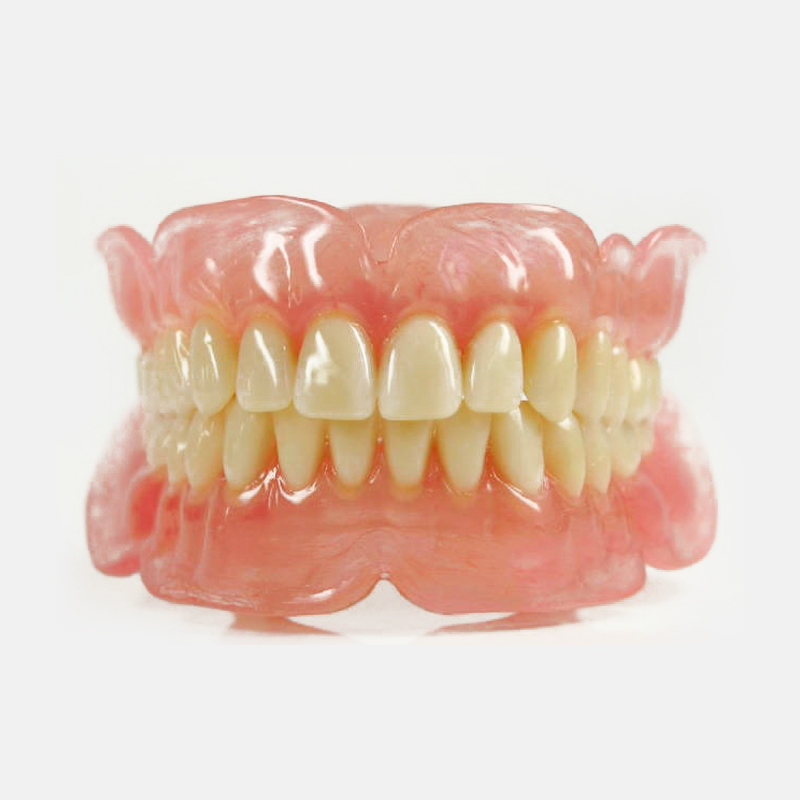
Lost-wax casting using Cobalt-Chromium alloys has been the historical standard for framework fabrication. This method relies on physical impressions, poured master casts, refractory duplication, wax pattern creation, investment, and casting.
While proven, traditional casting is highly technique-sensitive. Inherent risks include wax pattern distortion, investment expansion variables, alloy shrinkage, and manual finishing errors. These variables can compound, resulting in a framework that requires aggressive clinical adjustment, compromising fit, and ultimately affecting stability.
The CAD/CAM workflow has revolutionized framework production. Intraoral scanning captures highly accurate digital impressions, eliminating the distortions associated with physical impression materials and stone casts. Digital surveying automates the path of insertion and undercut detection, ensuring optimal clasp placement.
Software-driven framework design allows technicians to precisely control parameters such as virtual blockout angles and custom relief settings. The transition from physical wax to digital software ensures consistency and repeatability when fabricating a digital removable denture.
Selective Laser Melting and milling produce highly accurate, tension-free frameworks. SLM builds the framework layer by layer from metal powder, eliminating casting shrinkage and porosity. The resulting digital frameworks require minimal clinical adjustment, providing a superior fit and enhanced stability.
Converting a conventional Kennedy Class I or II distal extension into a pseudo-Class III arch significantly improves biomechanical stability. Strategic implant placement in the posterior edentulous regions provides rigid support, altering the fulcrum line and eliminating tissue-ward displacement.
An implant assisted removable denture utilizes attachments that interface directly with the metal framework. This connection eliminates distal extension lift and rotational torque, providing the patient with a prosthesis that functions similarly to a fixed restoration.
Implant assistance offers profound protective benefits for the residual alveolar ridge. By transferring occlusal forces to the implants rather than the mucosa, accelerated bone remodeling and ridge resorption are mitigated. This preserves the foundation for long-term stability.
As patient anatomy changes over time, an implant-assisted prosthesis offers scalability. Attachments can be changed or upgraded, and the framework can be modified to accommodate future restorative needs, ensuring the prosthesis remains functional and stable for years.
A common clinical conflict arises between concealing clasps for anterior esthetics and maintaining necessary mechanical bracing. Placing clasps too far gingivally or omitting them entirely compromises stability. Alternative designs, such as a rotational path of insertion, precision attachments, or acetal resin clasps, can mitigate esthetic concerns while providing adequate retention.
Framework design also heavily influences phonetics. The coverage and thickness of maxillary major connectors must be carefully designed to avoid obstructing tongue movement. Palatal contours must mimic natural anatomy to ensure clear speech and patient comfort.
Traditional Co-Cr alloys offer excellent rigidity in thin sections, making them ideal for major connectors. Titanium provides superior biocompatibility and lighter weight but can be more challenging to cast or mill accurately.
High-performance polymers offer superior esthetics and flexibility, making them suitable for patients with metal allergies or high esthetic demands. However, these polymers require increased bulk to achieve comparable rigidity to Co-Cr, which can compromise cross-arch stabilization and patient comfort.
Delegating complete design responsibility to the laboratory without clinical oversight is a significant clinical risk. The clinician must dictate the biomechanical requirements based on intraoral conditions.
Clear clinician-technician communication is essential. Provide a detailed prescription detailing rest seat locations, the desired path of insertion, and specific clasp selection. Reviewing digital wax-ups before SLM fabrication ensures the final framework meets all clinical requirements for stability and function.
The long-term clinical success and patient acceptance of a removable prosthesis are fundamentally dictated by the rigid, precise, and biomechanically sound design of its underlying framework. Without proper support, retention, and bracing, the prosthesis will fail to function adequately, leading to tissue damage and patient dissatisfaction.
Clinicians should evaluate laboratory partners based on their digital design capabilities, understanding of biomechanical support principles, and material options. A laboratory proficient in SLM Co-Cr and digital workflows will consistently deliver superior frameworks.
Audit your current framework prescription protocols to ensure comprehensive biomechanical planning.
Transition to digital impression workflows to improve accuracy and reduce manual errors.
Consult with a specialized laboratory for complex, implant-assisted cases to maximize stability.
Implement a strict review process for digital wax-ups prior to final framework fabrication.
A: The absolute requirement for stability is a rigid major connector and precise rest seat preparations. These components direct occlusal forces along the long axis of the abutment teeth, preventing horizontal shifting and tissue-ward displacement during mastication.
A: Digital workflows reduce human error and improve adaptation. Intraoral scanning, digital surveying, CAD software, and selective laser melting eliminate the variables of lost-wax casting, resulting in a tension-free fit that requires minimal clinical adjustment.
A: Implant assistance is highly recommended for Kennedy Class I and II arches where distal extension stability is compromised. It is also indicated when residual ridges are highly resorbed or when the prosthesis opposes heavy natural dentition.
A: PEEK and PEKK can be used for esthetic clasping and in cases of metal allergies. However, they require significantly increased bulk to achieve the same rigidity as Cobalt-Chromium, which can affect patient comfort and cross-arch stabilization.
A: Guiding planes, minor connectors, and reciprocal bracing arms must contact non-undercut surfaces of the abutment teeth. This reciprocal action neutralizes lateral and rotational forces generated during mastication, stabilizing the framework.
A: Natural teeth exert significantly higher occlusal forces than denture teeth. The framework must possess maximum rigidity, optimal rest preparation, and robust support mechanisms to prevent flexing, which leads to rapid tissue and bone resorption.
A: The coverage, thickness, and contour of maxillary major connectors must be carefully designed. Excessive bulk or improper placement can restrict the tongue's lateral and palatal movements, severely impacting pronunciation and speech clarity.


