


Views: 0 Author: Site Editor Publish Time: 2026-10-17 Origin: Site


Prosthetic quality starts long before the final polish. Dental Lab Materials influence fit, strength, and appearance throughout manufacturing. You’ll learn which structural, aesthetic, and supporting materials matter most, plus how to select compatible combinations for each prosthesis.
Zirconia, titanium, and dental casting alloys provide structural options for different restorations. Their suitability depends on approved indications and restoration design.
Material strength alone cannot predict finished-prosthesis performance. Dimensions, processing, surface condition, and functional demands also require assessment.
Start by identifying the structure the material must support.
Dental porcelain and indirect composites help reproduce tooth appearance. They provide different approaches to shade, translucency, and surface characterization.
Their compatibility with the supporting structure is essential. A suitable shade cannot compensate for an unsupported material combination.
Denture base materials form the foundation of removable prostheses. Approved acrylic resin and other systems require controlled fabrication.
Dimensional stability, processing instructions, and tooth compatibility influence selection. Evaluate the complete system before choosing individual components.
Denture teeth contribute tooth form, shade, and functional surfaces. Their wear characteristics and attachment requirements deserve consideration.
They must work with the selected base material. Coordinated selection helps avoid incompatible bonding or processing procedures.
Dental stone and approved model resins provide references for laboratory tasks. Their accuracy and surface detail influence inspection and fabrication.
Handling also matters because damaged reference surfaces can mislead technicians. Choose model materials according to their intended laboratory use.
Casting wax and pattern resins define shapes during certain manufacturing routes. Dental investment materials create molds for the casting process.
These materials do not remain in the finished prosthesis. However, their handling and compatibility can influence the resulting structure.
Tip: Map each material to its manufacturing role before comparing suppliers or prices.

Zirconia grades offer different mechanical and optical properties. Selection requires checking thickness, aesthetic requirements, and approved indications.
For a zirconia crown, match the material to the preparation and planned anatomy.
A crown indication does not automatically establish bridge suitability. Bridge spans and connector requirements need separate verification.
The referenced titanium listing includes Grade 5 and Grade 23 options. It also mentions other titanium grades across its specifications.
Buyers should request documentation identifying the exact supplied material. Confirm composition, delivery condition, dimensions, and applicable specifications.
Do not apply one grade’s report to another product.
Cobalt-chromium materials can support approved frameworks and metal-ceramic applications. Their suitability also depends on the manufacturing route.
Casting alloy, milling stock, and additive-manufacturing powder have different processing requirements. Treat them as distinct purchasing specifications.
Follow the instructions for the selected alloy and equipment.
A comparison matrix helps teams organize decisions. Exact product instructions remain necessary for final approval.
Material | Potential structural role | Main design checks | Aesthetic contribution | Processing priorities |
|---|---|---|---|---|
Zirconia | Approved crowns, bridges, and frameworks | Thickness, connectors, approved span | Tooth-colored material options | Milling, applicable sintering, finishing |
Titanium | Approved frameworks and components | Geometry, dimensions, interfaces | Usually supports further restorative construction | Grade verification, machining, finishing |
Cobalt-chromium | Approved frameworks and metal-ceramic structures | Framework dimensions and support | Commonly combined with other materials | Process-specific alloy selection and fabrication |
No material provides the best answer for every prosthesis. Choose according to the complete case requirements.
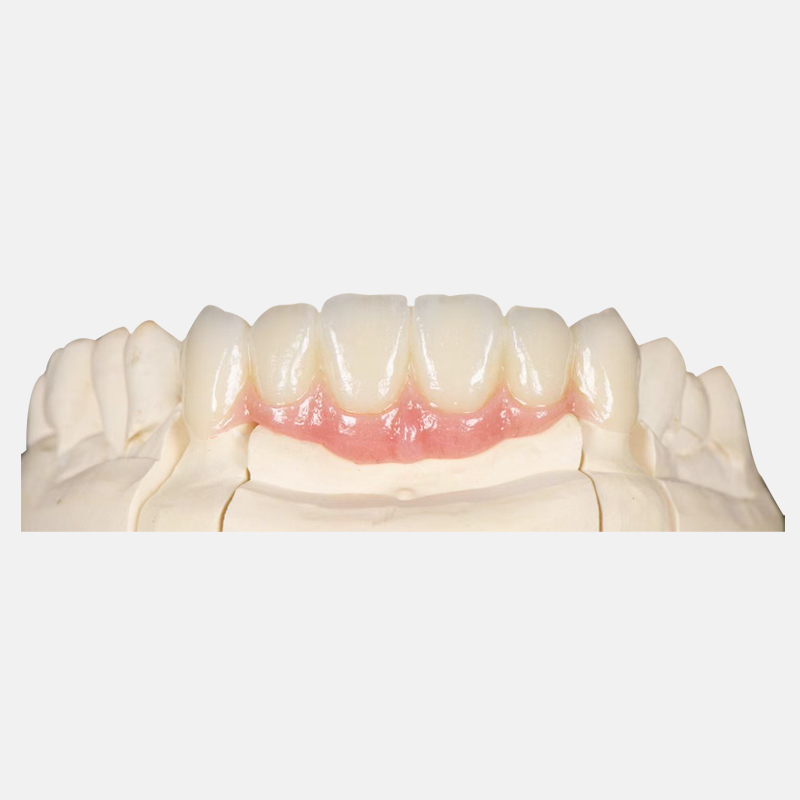
Dental porcelain supports layered shade reproduction and optical characterization. Its selection must also account for the supporting framework.
Use approved material combinations and firing instructions. Compatibility includes the thermal behavior of the complete system.
For zirconia bridge cases, confirm whether the prescribed design is monolithic or veneered.
That decision affects space allocation and aesthetic processing.
Indirect composites provide options for approved laboratory veneering and characterization. Their processing differs from fired porcelain systems.
Check substrate preparation, bonding products, and curing instructions. A direct restorative composite should not automatically replace an indirect laboratory product.
The intended use must support the planned application.
Some prostheses require reconstruction of visible gingival regions. Approved gingival resins can provide tissue-colored characterization in suitable applications.
Assess shade, contour, surface finish, and attachment to the supporting structure. These factors need coordinated planning.
The supplied resin link currently redirects to a supplier homepage. Its exact product indications therefore require verification.
“Polymerized ceramic” does not establish a precise material classification. Request composition and instructions before planning production around that description.
Confirm approved curing equipment, exposure requirements, and layer limits. A light-cured resin follows a different process from fired ceramic.
Tip: Verify the actual material system before assigning curing procedures or clinical indications.
Denture base systems include product-specific heat-cured, self-cured, milled, and printed options. They do not share identical manufacturing behavior.
Each requires its prescribed processing and finishing sequence. Printed systems also need the specified washing and post-curing procedures.
Assess dimensional control through the validated workflow. Do not assume every acrylic resin product behaves equivalently.
Select denture teeth according to the prescribed form, shade, and functional requirements. Then confirm compatibility with the chosen base.
Follow approved tooth preparation and attachment procedures. The interface between teeth and base requires deliberate assessment.
Individually suitable products may still require a specific bonding system.
Framework support, resin retention, and available space influence removable prosthesis construction. Material selection should reflect these design requirements.
Changing the framework or base material may require reassessment. Review the complete combination before fabrication begins.
This helps prevent substitutions from creating unsupported design assumptions.
Dental model materials should reproduce relevant surfaces accurately. They also need suitable handling and abrasion resistance for their task.
A damaged or inaccurate model can mislead fit assessment. Inspect reference areas before using them to judge a restoration.
For inlay and onlay restorations, reliable reproduction of preparation details is particularly useful.
Patterns need protection from distortion during storage and handling. Their dimensions establish the form used in subsequent processing.
Follow the material’s timing and handling instructions. Confirm approved burnout behavior for the selected pattern and investment combination.
Pattern errors can carry forward into the casting.
Investment selection depends on the alloy and prescribed casting conditions. Mixing and thermal processing must follow the selected system’s instructions.
Control the specified liquid ratio and processing sequence. Do not transfer expansion or burnout settings between unrelated products.
A universal recipe cannot address every material combination.
Abrasives, polishing systems, and cleaning products affect surface preparation. They should match the material being finished.
Inappropriate finishing can damage surfaces or complicate later processing. Inspect the result after adjustments and polishing.
These consumables support manufacturing quality, although they do not provide the prosthesis’s structural foundation.
Request instructions, composition information, relevant reports, and batch identification. Confirm that each document applies to the supplied formulation or grade.
Quality-management certification describes a management system. It does not independently establish every product’s suitability for a particular prosthesis.
Resolve missing information before routine use.
Review framework-to-veneer, teeth-to-base, and resin-to-substrate combinations. Check approved primers, bonding agents, and processing equipment.
Compatibility depends on the complete interface. Two appropriate materials do not automatically create an approved combination.
For broader zirconia restoration options, clarify the intended design before selecting supporting aesthetic materials.
Trial cases can reveal handling, fit, shade, and finishing differences. Evaluate them using consistent acceptance criteria.
Record visible defects and additional production effort. Compare similar cases to make the results useful.
Laboratory trials assess manufacturing behavior. They cannot establish long-term clinical survival.
Follow instructions for shelf life, temperature, light exposure, and contamination control. Storage requirements vary between material systems.
Record batches and relevant processing details for each case. Reassess substitutions before introducing them into routine production.
Tip: Keep approval records linked to the exact product, grade, and processing instructions.
An aesthetic crown places emphasis on optical integration and structural suitability. A framework-supported prosthesis also requires attention to interfaces and supporting geometry.
A removable denture needs coordinated base, teeth, and framework selection where applicable. Its priorities differ from a single-unit restoration.
The prescribed prosthesis should guide the comparison.
Fit discrepancies require reviewing models, design, and processing. Shade problems warrant checking substrates, aesthetic materials, and finishing.
Interface problems need examination of compatibility and handling records. Avoid attributing every defect to the main structural material.
Investigate one likely cause at a time.
Material price represents only part of the finished-case cost. Include processing, labor, rejected work, and remakes.
A simple measure is:
Cost per accepted prosthesis = Total relevant production cost ÷ Number of accepted prostheses
Apply consistent accounting boundaries across comparisons. The cheapest input may require more labor or produce additional rejected work.
A short checklist helps purchasing and production teams share the same requirements:
Confirm the product’s intended use.
Verify material and interface compatibility.
Review grade-specific or formulation-specific documentation.
Confirm available processing equipment and instructions.
Record representative trial results.
Reassess changes in suppliers, formulations, or manufacturing methods.
Use it before standardizing a new material. Keep approval decisions tied to the cases the laboratory actually produces.
Dental Lab Materials influence prosthetic fit, strength, and appearance throughout manufacturing. Compatible structural, aesthetic, and supporting materials help laboratories achieve consistent results through controlled processing and documented selection. LEZY Lab offers customized crowns, bridges, and dentures through professional laboratory services. Its tailored approach helps dental teams match material choices to each case’s functional and aesthetic requirements.
A: Dental Lab Materials include structural, aesthetic, and manufacturing-support materials.
A: Dental Lab Materials must match indications, processing methods, and interface requirements.
A: Compatible Dental Lab Materials support consistent fabrication and reduce avoidable rework.
A: Zirconia and cobalt chromium serve different structural and aesthetic requirements.
A: Processing and remakes affect costs; investigate compatibility, firing, and handling when defects recur.


