


Views: 0 Author: Site Editor Publish Time: 2026-10-14 Origin: Site


When tooth loss compromises your mastication, speech clarity, and overall self-assurance, a well-crafted Removable Denture offers a highly reliable, natural-looking solution. However, not all prosthetics are engineered equally. If you are preparing to invest in a new smile, one of the most critical decisions you and your clinician will make involves the underlying composition of your restoration.
The specific compounds utilized dictate how natural your artificial teeth appear. They determine how the appliance interacts with your sensitive gum tissue. More importantly, they decide exactly how many years your investment will survive the daily mechanical stress of chewing. In this comprehensive guide, we will break down the structural engineering behind modern prosthetics. We aim to help you navigate the complex world of dental materials, empowering you to make an informed, confident choice for your long-term oral health.
Two Main Components: A standard prosthetic consists of two primary anatomical parts. The foundational framework rests directly against the mucosal tissues, while the artificial teeth restore aesthetics and mastication.
Base Materials Vary: The dental industry relies on three main categories for the base. These include rigid acrylic resins, highly durable metal alloys (such as chrome-cobalt), and flexible thermoplastic polymers.
The Acrylic Standard: Conventional acrylic remains the most popular choice for complete arch replacement. It offers highly customizable gingival color and relative ease of clinical adjustments.
Partial Denture Strengths: When replacing only a few missing teeth, a lightweight metal framework provides superior structural stability. This allows for a significantly thinner, less intrusive palate coverage.
Tooth Materials: The visible teeth are predominantly manufactured from high-impact, cross-linked acrylic resins. Traditional porcelain is occasionally used for its unmatched wear resistance, though it is much heavier.
Personalized Choice: Selecting the optimal material requires evaluating your anatomical factors, bite force, documented metal allergies, and budget constraints.
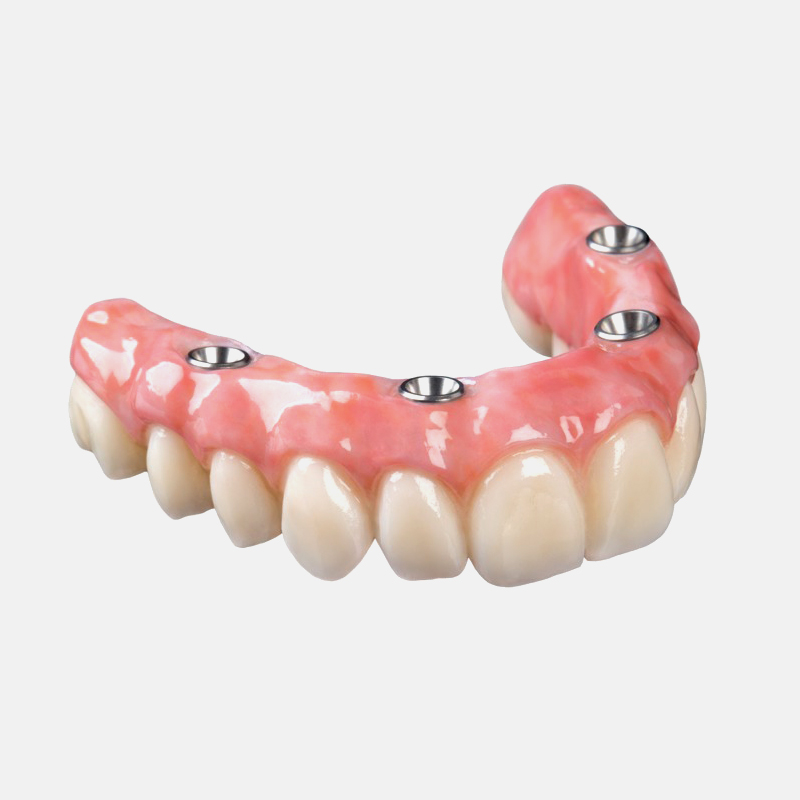
Before diving into specific chemical compositions, it is crucial to understand how a dental appliance is physically engineered. A standard removable prosthetic is not a single homogenous block of plastic. Instead, it is a precisely crafted device divided into two distinct functional zones. Each zone demands vastly different physical properties.
Think of the Denture Base (Framework) as the foundation of a building. Anatomically, it features a tissue-bearing surface that rests intimately against your alveolar ridge. The polished outer surface is designed to mimic the stippled appearance of natural gums. Its primary job? To distribute extreme chewing forces evenly across the underlying bone without fracturing. Consequently, the material used here must be exceptionally strong, yet entirely biocompatible.
Mounted upon this foundation are the Artificial Teeth. These components serve as the functional replacements for your natural dentition. Because they are responsible for physically breaking down tough foods and maintaining the vertical dimension of your jaw, the materials chosen must exhibit high compressive strength. Exceptional wear resistance and absolute color stability are also mandatory to prevent staining from your morning coffee or evening wine.
The material utilized for the framework dictates the overall weight, thermal conductivity, and daily comfort of your prosthetic. Based on clinical indications, dental professionals generally select from three primary categories.
Polymethyl methacrylate (PMMA) represents the industry standard, particularly for complete arch restorations. This rigid, synthetic polymer undergoes a specialized curing process to form a solid, durable plastic. Dental laboratories can meticulously tint this material with red micro-fibers to replicate the vascular look of real gums.
From a clinical maintenance perspective, an Acrylic Denture is uniquely advantageous. As your jawbone naturally shrinks over the years, dentists can easily adjust, repair, or "reline" an acrylic base chairside. This significantly extends the life of the appliance. Top-tier PMMA materials often boast a flexural strength exceeding 65 MPa with minimal residual monomer, ensuring high biocompatibility. However, to achieve the necessary strength, standard acrylic bases must be fabricated with a certain degree of thickness. When you first slip the appliance into your mouth, this bulkiness can initially feel overwhelming. Furthermore, because plastic acts as a thermal insulator, you may experience a slightly reduced sensation of hot and cold temperatures while eating.
Metal alloys are predominantly utilized in the substructure of a Removable Partial Denture. In these designs, a rigid chrome-cobalt skeleton spans the dental arch. It features precision clasps that engage your remaining natural teeth for mechanical retention. The visible portions of the metal are subsequently overlaid with pink acrylic to hold the artificial teeth.
Metal possesses a remarkably high modulus of elasticity. This high strength-to-weight ratio allows the laboratory to cast the framework significantly thinner than an acrylic base. The result is a far less intrusive appliance that rarely interferes with speech. In addition, metal is highly thermally conductive. Feeling the natural temperature of a hot bowl of soup or a cold glass of water dramatically enhances the sensory experience of eating. Conversely, fabricating a cast metal framework is a labor-intensive process that incurs a higher financial cost. You should also note that the retaining clasps may occasionally be visible when you smile widely.
For patients who experience chronic discomfort with rigid materials, present with irregular bone undercuts, or have documented allergies to PMMA monomers, flexible thermoplastic polymers offer a brilliant alternative. These nylon-based materials are injected under high heat to form a translucent, pliable base.
The inherent flexibility allows the appliance to adapt dynamically to the micro-movements of your mouth during mastication. Because the material is highly resilient, it is virtually unbreakable under normal intraoral forces. Specifically, flexible bases utilize tissue-colored extensions rather than metal hooks, providing a superior, seamless aesthetic. The trade-off, however, is adjustability. Nylon polymers are notoriously difficult to polish or repair. Unlike acrylic, a flexible base generally cannot be relined to accommodate future bone loss. If the fit becomes loose, the appliance often requires a complete remake.
While the base provides the foundational support, the artificial teeth endure the direct, repetitive physical trauma of chewing. Modern dentistry primarily relies on two specific materials to balance aesthetic realism with mechanical durability.
In contemporary prosthodontics, the overwhelming majority of artificial teeth are manufactured from advanced, highly cross-linked acrylic resins. These teeth are significantly lower in density than traditional ceramics. This makes the overall appliance lighter and reduces the gravitational pull on upper full-arch replacements.
Crucially, acrylic teeth form a strong, seamless chemical bond with the PMMA denture base during the curing process. This eliminates microscopic gaps where odor-causing bacteria could accumulate. While modern cross-linked acrylics offer excellent fracture resistance and are relatively gentle on opposing natural teeth, they are inherently softer than natural enamel. Over a period of 5 to 7 years, the occlusal surfaces will gradually wear down, potentially altering your bite alignment.
Before the advent of advanced polymers, porcelain was the absolute gold standard. It possessed an unmatched ability to mimic the translucency, light refraction, and hardness of natural tooth enamel. Porcelain is exceptionally hard, highly resistant to abrasion, and completely impervious to coffee or tobacco stains.
Despite its beauty, the use of porcelain has sharply declined in recent years. It has a high specific gravity, making the prosthetic noticeably heavy. Because porcelain cannot chemically bond to an acrylic base, the teeth must be mechanically retained using tiny metal pins. This can compromise the base's structural integrity. Most importantly, the extreme hardness of porcelain transmits excessive shock directly to the underlying alveolar ridge. This constant impact can rapidly accelerate irreversible bone resorption. Today, it is generally reserved for highly specific cases where the patient has no remaining natural dentition to damage.
To help visualize the differences between the primary base materials, review the performance comparison below. This data reflects standard clinical observations and engineering specifications.
Material Type | Flexural Strength | Aesthetics | Adjustability (Relines) | Best Application |
|---|---|---|---|---|
PMMA (Acrylic) | Moderate (Requires bulk) | Good (Customizable gums) | Excellent | Full Arch Replacements |
Chrome-Cobalt | Very High (Thin & rigid) | Fair (Metal clasps visible) | Moderate | Partial Replacements |
Nylon (Flexible) | High (Shatter-proof) | Excellent (No metal) | Poor (Cannot be relined) | Aesthetic Partials |
Recently, the prosthodontics sector has experienced a profound transformation driven by digital dentistry. Industry analysis reveals a rapid market shift toward CAD/CAM (Computer-Aided Design and Manufacturing) technologies and 3D printing. Rather than relying solely on traditional hand-mixed acrylics, modern laboratories increasingly mill premium prosthetics from industrially processed, highly condensed polymer pucks.
This digital transition not only minimizes human error but completely eradicates the polymerization shrinkage associated with older techniques. The result is a medically precise fit that drastically reduces mucosal sore spots. Furthermore, there is a surging trend toward high-performance, metal-free polymers like PEEK (Polyetheretherketone). These advanced materials provide the structural integrity of cast metal alloys while meeting the rising patient demand for highly biocompatible, aesthetically pleasing, and lightweight restorations. As material science evolves, the gap between natural teeth and prosthetics continues to close rapidly.
Selecting the optimal material is not a one-size-fits-all endeavor. Instead, it is a highly personalized, collaborative process between you and your dental provider. To ensure a successful clinical outcome, evaluate these specific variables:
Assess Your Tissue Health: If you suffer from highly sensitive oral mucosa or prominent bony growths (tori), rigid materials may cause chronic irritation. In such scenarios, a digitally milled acrylic base or a flexible Partial Denture is clinically indicated to drastically reduce soft tissue trauma.
Evaluate Biomechanical Durability: Do you exhibit severe bruxism (teeth grinding)? Extreme occlusal forces will easily shatter standard plastics. A cast metal framework or a high-impact, digitally milled acrylic base is absolutely essential to prevent recurrent fractures.
Determine Aesthetic Requirements: If achieving an imperceptible, natural-looking restoration is your primary objective, discuss the integration of premium, multi-layered nano-composite teeth. For partial replacements in the front of the mouth, flexible nylon bases completely eliminate the visual intrusion of traditional metal hardware.
Check Immunological Factors: Although statistically rare, allergic contact stomatitis can occur in response to unreacted methyl methacrylate monomer or specific base metals like Nickel. If you have a known history of contact dermatitis from inexpensive jewelry, request hypoallergenic alternatives. Injection-molded monomer-free resins or pure titanium frameworks are excellent, safe options.
Transitioning to life with a dental prosthetic involves more than just selecting the right components. It requires a strict commitment to daily hygiene. The microscopic surface structure of your chosen materials dictates exactly how they must be maintained.
Imagine waking up and rushing through your morning routine. Taking just two extra minutes to properly brush your appliance can add years to its clinical lifespan. Despite appearing completely smooth to the naked eye, acrylic resin is microscopically porous. If plaque is not removed daily, fungi such as Candida albicans will penetrate these pores, leading to chronic bad breath and painful tissue inflammation.
Always use a soft-bristled brush and a specialized, non-abrasive cleaner. Never use standard toothpaste on acrylic or flexible polymers. Its abrasive nature is designed for hard natural enamel and will create microscopic scratches in the plastic where odor-causing bacteria love to hide. In contrast, for appliances with metal frameworks, meticulous attention must be paid to the clasps. If plaque accumulates on the inside of a metal clasp, it acts as a constant source of acid against your abutment tooth, rapidly accelerating devastating tooth decay. Finally, remember that acrylic and nylon polymers rely on moisture to maintain their dimensional stability. Always store your appliance in plain water or a mild soaking solution overnight to prevent irreversible warping.
Selecting the appropriate materials for your dental appliance is a foundational step toward reclaiming your chewing function, speech clarity, and self-esteem. Whether you opt for the classic adjustability of an acrylic base, the unmatched structural integrity of a cast metal framework, or the seamless comfort of flexible polymers, the specific composition you choose will directly influence your daily quality of life.
By understanding the biomechanical strengths and limitations of these modern engineering materials, you are now fully equipped to have an informed, productive conversation with your dental provider. Ready to explore high-performance restorative solutions? Discover precision-crafted Dental Denture products at Lezy Lab, where advanced material science meets clinical excellence to ensure your new smile is both beautiful and built to last.
Historically, porcelain teeth combined with a custom-tinted acrylic base offered the most lifelike appearance. This was due to porcelain's natural translucency and ability to reflect light exactly like human enamel. However, porcelain is exceptionally heavy and transmits intense bite forces directly to the underlying jawbone, accelerating bone resorption. Today, the clinical standard for natural aesthetics relies on premium, multi-layered, high-impact acrylic or nano-composite resins. These modern materials are manufactured using distinct layers that mimic the dentin and enamel of real teeth, providing a highly realistic depth of color while remaining lightweight and safer for long-term bone health.
Whether one material is "better" depends entirely on objective clinical indicators and your specific anatomical needs. Flexible materials, such as thermoplastic nylon, are highly advantageous for partial tooth replacement. They are virtually invisible because they utilize tissue-colored flexible clasps instead of rigid metal hooks. Furthermore, they engage the natural undercuts of the gums without causing discomfort. Conversely, conventional acrylic is generally considered superior for full-arch replacement. Full appliances rely on suction to stay in place, requiring a rigid material to distribute chewing forces evenly. Acrylic is also clinically superior for long-term maintenance, as it can be easily adjusted and relined as your jawbone naturally changes shape over time.
While relatively rare, hypersensitivity or allergic reactions to dental prosthetics are thoroughly documented in clinical literature. The most common reaction is to the liquid monomer used in the curing process of standard acrylic resins. This can cause contact stomatitis, characterized by a burning sensation and redness. In addition, some patients possess systemic allergies to specific base metals, particularly nickel or cobalt, which are frequently used in cast metal frameworks. In cases of documented allergies, dentists can safely utilize hypoallergenic alternatives such as injection-molded flexible nylon polymers or highly biocompatible pure titanium frameworks.
Based on standard clinical guidelines, a high-quality acrylic appliance typically functions optimally for a period of 5 to 7 years. This lifespan is not strictly due to the degradation of the plastic itself, but rather a combination of material wear and physiological changes in the patient's mouth. Over years of daily mastication, the acrylic teeth will naturally suffer from occlusal wear, decreasing chewing efficiency. Concurrently, the alveolar bone ridge naturally shrinks following tooth loss. After 5 to 7 years, the discrepancy between the rigid acrylic base and the receded gum tissue usually becomes too significant to correct with a simple reline, necessitating a completely new appliance.
A cast metal framework, predominantly crafted from a chrome-cobalt or titanium alloy, is objectively the strongest and most durable material utilized for partial tooth replacement. These alloys possess exceptional tensile strength and high fatigue resistance. This superior strength allows dental laboratories to cast the framework incredibly thin without compromising structural integrity, preventing the appliance from feeling overwhelmingly bulky in the mouth. In contrast, an all-acrylic partial has very low flexural strength and must be made quite thick to prevent snapping under bite pressure, making metal the gold standard for long-term durability.
Comfort levels depend heavily on the accuracy of the impression, the material chosen, and the patient's adaptation period. Initially, any prosthetic will feel like a foreign object, causing increased saliva production and slight speech alterations. However, modern digitally milled PMMA bases and flexible nylon polymers offer a much more intimate, tissue-friendly fit than older conventional methods. With proper chairside adjustments by your dentist to eliminate pressure spots, most patients find them highly comfortable for all-day wear within a few weeks.
Material selection plays a significant role in the final cost of the prosthetic. Standard cold-cured acrylic bases with stock plastic teeth are generally the most economical option. Upgrading to a cast chrome-cobalt metal framework increases the price due to the intensive laboratory casting process and the cost of the raw alloys. Premium options, such as digitally milled CAD/CAM PEEK frameworks or high-impact nano-composite teeth, sit at the highest price tier. These premium materials reflect the advanced technology, superior aesthetics, and enhanced longevity they provide to the patient.


