


Views: 0 Author: Site Editor Publish Time: 2026-10-05 Origin: Site


Picture a patient looking in the mirror for the first time after an implant procedure. They flash a flawless, natural-looking smile. That seamless fit does not just magically happen in the dentist's chair. Behind every successful implant restoration lies a meticulous, highly precise workflow executed off-site in a dental laboratory.
At the very center of this behind-the-scenes craftsmanship is an unassuming yet absolutely vital component. Acting as an exact replica of the titanium root surgically placed in the jaw, a Dental Analogue serves as the unsung hero of restorative dentistry. Technicians rely entirely on this precise substitute. It empowers them to design, mill, and refine custom prosthetics entirely outside of the patient's mouth.
This comprehensive guide delves into the hard mechanics of this critical component. We will explore its specific applications on the benchtop and trace its role through both traditional and modern digital workflows. Furthermore, we will uncover why selecting premium restorative components is the ultimate key to ensuring long-lasting biomechanical stability and protecting your profit margins.
An analogue is a highly precise physical or digital replica of a surgical implant. Laboratories utilize it exclusively to recreate unique oral anatomy on the benchtop.
Its primary function is to provide an unyielding, accurate foundation for fabricating custom restorations. This spans from single crowns to complex multi-unit overdentures.
The restorative industry is undergoing a massive digital transformation. Labs are rapidly shifting from traditional plaster-embedded components to advanced digital versions engineered for 3D-printed resin models.
Investing in premium laboratory replicas ensures exceptional structural fit. This drastically reduces clinical chair time for the dentist and minimizes the risk of costly prosthetic remakes.
Choosing the correct components requires strict attention to material durability, such as medical-grade stainless steel, and exact dimensional compatibility with the original surgical system.
To fully grasp the mechanics of modern restorative dentistry, one must first understand the foundational hardware. A dental analogue is a manufactured, non-clinical component. Engineers design it to mimic the exact three-dimensional position, spatial angulation, and internal connection interface of the surgical implant integrated into the jawbone.
The actual titanium implant fuses permanently with the bone through osseointegration. Therefore, the dental laboratory requires a highly reliable substitute to work with on the benchtop. This component serves as that exact master reference. It ensures that whatever microscopic adjustments a technician makes in the lab will translate seamlessly to the clinical environment.
Within the dental industry, nomenclature occasionally overlaps depending on the specific procedure. Professionals frequently refer to this part interchangeably.
The term implant analogue is typically used when discussing the component in relation to the specific surgical system it replicates. Conversely, technicians often favor the term lab analogue. This emphasizes its exclusive operational environment within the laboratory setting rather than the clinical operating room.
To visualize this engineering concept, imagine a master architect attempting to construct a custom steel roof without knowing the exact dimensions of the foundation. The surgical implant acts as the foundation buried deep in the ground. The analogue serves as the architectural blueprint handed over to the builders. It dictates the exact angles, hex connections, and structural parameters required to build the final ceramic crown. Without this precise reference point, the resulting structure inevitably suffers from misalignment, instability, and eventual mechanical failure.
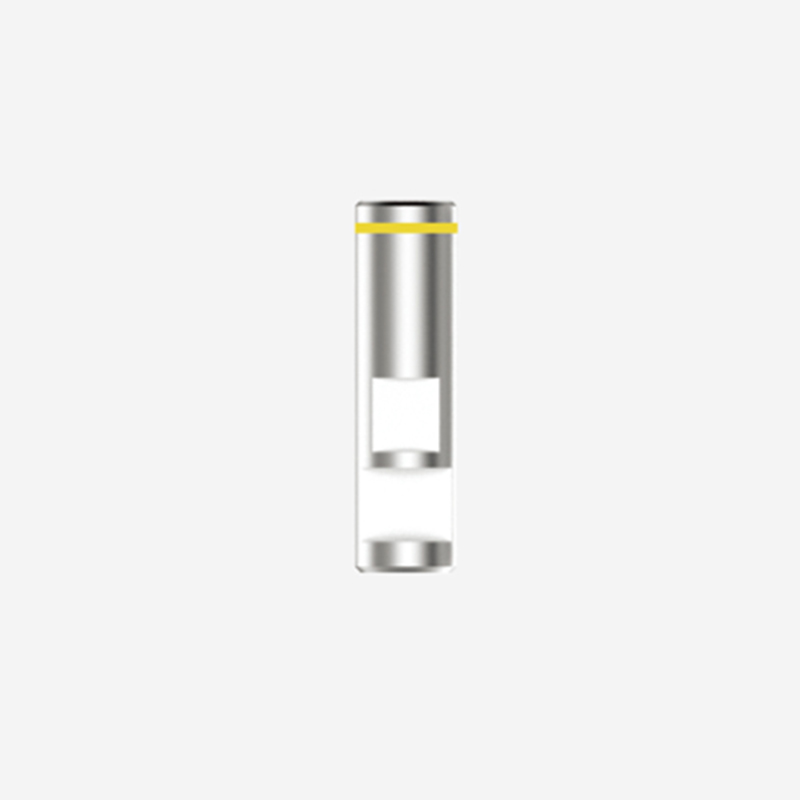
The utility of this component extends across multiple critical stages of the restorative pipeline. Its applications are fundamental to ensuring the final prosthetic is functionally robust and aesthetically indistinguishable from natural dentition.
The most immediate and crucial use of an Implant Analogue is the creation of the master working model. In a traditional setting, a technician securely attaches the component to an impression coping housed within the physical mold. As liquid dental stone pours over this assembly, the curing heat and expansion of the gypsum lock the component permanently in place. Once fully set, the model perfectly represents the spatial relationship between the implant and the surrounding soft tissues.
When tasked with replacing a single missing tooth, the analogue acts as the rigid holding mechanism for the titanium abutment. The technician secures the abutment into the model just as the clinician will eventually torque it into the mouth. This unyielding stability allows the ceramist to aggressively layer porcelain, mill zirconia, and polish margins under a microscope. They work with absolute confidence that the connection interface remains pristine.
For multi-unit restorations like full-arch concepts, the stakes are significantly higher. Here, multiple replicas are embedded into the model simultaneously. Technicians rely on them to achieve a passive fit. A passive fit means the metal or zirconia framework sits perfectly flush across all connection points without applying uneven biomechanical stress. Even a ten-micron misalignment across multiple implants exerts destructive tension. This tension transfers directly to the patient, potentially leading to catastrophic bone loss.
Recent industry analyses highlight a massive paradigm shift toward digital dentistry. Driven by the demand for faster turnaround times and higher precision, laboratories are rapidly abandoning traditional gypsum models. Instead, the market shows a surging preference for 3D-printed resin platforms.
This digital transformation eliminates the messy, time-consuming plaster process. More importantly, it mitigates the risk of material expansion errors inherent in dental stone. Clinics now utilize high-resolution intraoral scanners to capture oral data, sending files instantly to the lab. By adopting a Lab Analogue designed specifically for CAD/CAM workflows, dental labs dramatically improve their production efficiency. They deliver prosthetics with micron-level accuracy while staying highly competitive in an evolving market.
As the dental industry embraces technological advancements, the tools of the trade evolve in tandem. The transition from analog to digital methodologies has fundamentally reshaped how engineers design and deploy these components.
Feature | Traditional Analogues | Digital Analogues |
|---|---|---|
Working Model | Gypsum / Dental Stone | 3D Printed Resin Models |
Surface Design | Deep retention grooves and knurled textures for plaster grip. | Flat sides and hex bases for strict anti-rotation control. |
Fixation Method | Locked in place by expanding curing plaster. | Secured via a secondary bottom-fixation screw. |
Reusability | Single-use. Extracting them damages the component. | Highly reusable. Can be unscrewed and sterilized. |
Accuracy Risk | Vulnerable to plaster volumetric expansion errors. | Exceptional precision driven by CAD software calculations. |
A dental restoration is never a standalone product. It is a complex assembly of interconnected parts working in perfect unison. Within this broader ecosystem, the analogue serves as the central pillar.
To successfully restore a missing tooth, a laboratory relies on a specific sequence of hardware. The replica must interface flawlessly with impression copings, healing abutments, prosthetic screws, and titanium bases. Categorized broadly as a critical Dental Accessory, its internal geometry must be machined to mirror the original surgical implant perfectly. If a laboratory utilizes a poorly machined part with a tolerance deviation of just a few microns, the final crown will fail entirely when the dentist attempts clinical delivery.
Investing in premium, high-precision laboratory components yields compounding benefits. These advantages positively impact the technician, the clinician, and the patient.
High-quality components ensure an exact, flush replication of the implant platform. This extreme precision is vital for preventing micro-gaps between the final abutment and the implant. Micro-gaps harbor dangerous bacteria. This leads to tissue inflammation and a destructive condition known as peri-implantitis, which ultimately causes implant failure.
For a practicing dentist, time is the most valuable resource. When a laboratory uses highly accurate components, the resulting crown fits passively and perfectly on the first try. Consequently, the clinician spends significantly less time grinding or adjusting the crown during the delivery appointment. This leads to a smoother, highly profitable daily schedule.
While premium components carry a slightly higher initial price tag compared to generic alternatives, they are inherently more cost-efficient. A flawed replica inevitably leads to a poorly fitting framework, necessitating a complete remake. Remakes consume additional clinical time and waste expensive laboratory materials like milled zirconia. They also severely strain the professional relationship between the clinic and the lab.
For dental technicians and procurement managers, selecting the correct hardware is a critical operational decision. Stop guessing and evaluate suppliers based on hard engineering criteria.
Demand Strict Machining Tolerances
The most critical factor is dimensional accuracy. Look for manufacturers that guarantee machining tolerances within +/- 5 microns. Anything looser introduces rotational play on the benchtop, which translates to a wobbly crown in the mouth.
Verify System Compatibility
The component must be a perfect match for the specific implant brand, platform diameter, and connection geometry placed by the surgeon. Whether dealing with an internal hex or a conical connection, utilizing close enough parts guarantees prosthetic failure.
Specify Durable Materials
While they do not need to be biocompatible, lab components must withstand harsh fabrication rigors. Insist on medical-grade stainless steel, high-strength titanium alloys, or anodized aluminum. These materials offer exceptional resistance to heavy CNC milling vibrations and repetitive screw tightening.
Ensure Digital Library Availability
For modern laboratories operating within a digital framework, physical parts are useless without corresponding digital data. Choose a supplier that provides comprehensive, open-architecture CAD libraries. These files allow technicians to seamlessly integrate the virtual component into design software like Exocad or 3Shape.
A dental analogue is the undisputed cornerstone of accurate implant restorations. By acting as a flawless replica of the surgical site, it bridges the physical gap between the patient's mouth and the dental laboratory. This critical tool enables technicians to craft true masterpieces of restorative dentistry.
Whether your laboratory relies on traditional stone models or fully embraces advanced 3D-printed resin workflows, the quality of your replica directly dictates your success rate. Compromising on these foundational components introduces unacceptable risks to patient safety and lab profitability.
Elevate your restorative process today. We strongly encourage dental professionals and lab technicians to upgrade their daily workflows. Explore the high-precision dental analogues and implant accessories available at Lezylab to ensure every crown seats perfectly the first time.
An implant is a biocompatible titanium screw surgically placed into the jawbone to act as an artificial tooth root. An implant analogue is a replica used exclusively in the dental laboratory. It never enters the patient's mouth. Instead, it stays embedded in a physical or digital model to replicate the surgical implant's exact position for the technician.
Accuracy is paramount in restorative dentistry. A high-quality analogue should be machined to tolerances within +/- 5 microns. This microscopic level of precision ensures that the titanium base and final crown fit without any rotational play or micro-gaps, which are primary causes of bacterial infection and mechanical failure.
Yes, indirectly. If a laboratory uses a poorly manufactured analogue, the final dental crown will be fabricated to fit that flawed model. When the dentist places this inaccurate crown onto the real implant in the patient's mouth, it creates uneven biomechanical stress and micro-gaps. Over time, this stress leads to bone loss, while the gaps harbor bacteria causing peri-implantitis, eventually leading to total implant failure.
This depends entirely on the specific workflow. Traditional analogues embedded in hard dental stone are generally single-use. Breaking the stone to retrieve them often scratches the delicate connection interface. However, digital analogues designed for 3D-printed resin models are secured with screws. Technicians can easily unscrew, sterilize, and reuse them, provided they show no signs of mechanical wear.
Because they never enter the human body, lab analogues do not require strict biocompatibility standards. Instead, manufacturers machine them from highly durable metals such as medical-grade stainless steel, titanium alloys, or anodized aluminum. These robust materials withstand the heavy torque, friction, and mechanical stress inherent in milling and fabrication processes.
If your dentist mentions a digital analogue, you are benefiting from state-of-the-art digital dentistry. Instead of using messy putty to take an impression, the dentist uses a high-tech intraoral scanner to map your mouth. The laboratory then uses a digital analogue within a computer-designed, 3D-printed model. This ensures your new tooth fits flawlessly and provides a much faster, more comfortable experience.


