


Views: 0 Author: Site Editor Publish Time: 2026-10-28 Origin: Site


A successful dental restoration requires more than just placing a titanium screw in the jawbone. The long-term stability of the final porcelain crown relies heavily on the structural connector bridging the gap. Achieving a seamless and durable result in modern implant dentistry demands precision engineering. While off-the-shelf options are available, a personalized approach has rapidly become the clinical standard. This guide explores the engineering principles, biomechanical advantages, and clinical applications of these tailored components.
A structural connector is the vital component bridging the titanium root in the jawbone to the final prosthetic crown.
Personalized solutions are uniquely designed and precision-milled to match the exact biological contours of a patient’s tissue architecture.
Primary clinical applications include shaping the emergence profile, ensuring a flawless marginal seal, and preventing inflammatory diseases.
Fabrication materials typically involve high-strength Titanium Grade 5 ELI and high-translucency Zirconia for optimal aesthetics.
Customized components offer superior long-term biomechanical success and significantly reduce the risk of mechanical fatigue compared to standard alternatives.
To fully grasp the value of personalized dental engineering, it is essential to understand the fundamental mechanics of a restoration. A successful procedure relies on multiple components working in perfect mechanical and biological harmony.
A complete restoration system consists of three distinct parts. The fixture acts as the artificial root surgically fused with the jawbone. The connector serves as the transitional bridge extending above the gum line. Finally, the crown provides the visible chewing surface necessary for daily function.
Within this assembly, the middle interface serves as the critical structural anchor. It is a highly specialized Implant Accessory designed to securely hold the prosthesis in place. It simultaneously protects the underlying surgical site from bacterial micro-leakage. Without a precision-milled interface, the entire system becomes vulnerable to screw loosening and biological complications.
The mechanics of this connection are rooted in strict manufacturing tolerances. Once the titanium root has fully integrated with the bone, the connector is attached using a central retention screw. This junction utilizes internal conical or hexagonal designs to prevent even microscopic movements during heavy chewing.
Once torqued to the manufacturer's exact specifications, the final prosthesis is attached. Dentists generally achieve this by cementing the crown or screwing it directly into the interface. Regardless of the retention method, the foundation must provide a stable grip to ensure the tooth remains firmly anchored under the immense pressures of the human bite.
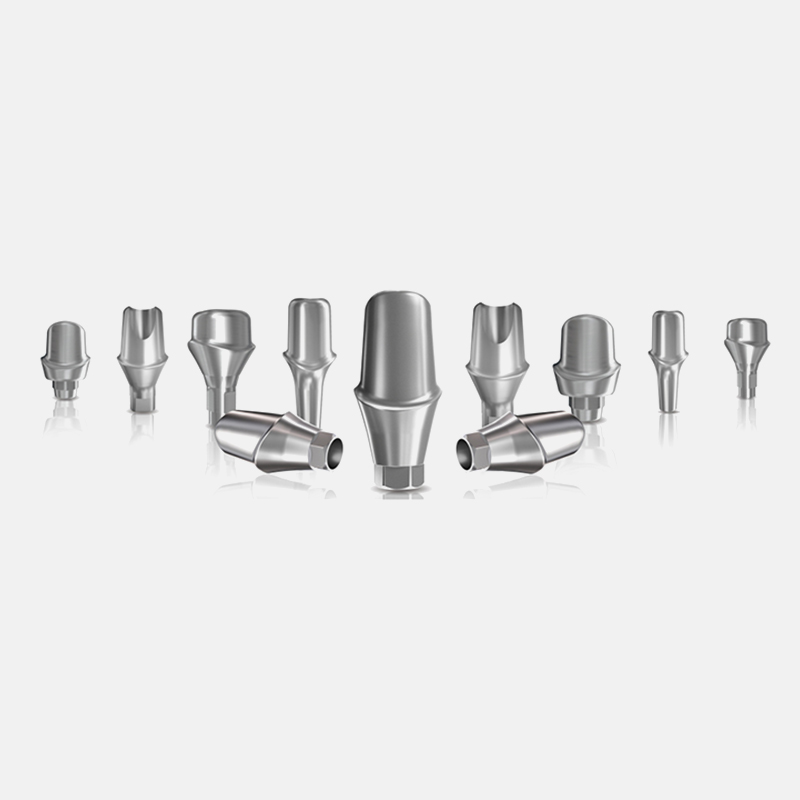
Standard connectors merely link the root to the crown. However, a tailored solution is engineered to address the highly variable anatomical landscape of individual patients. Its applications extend far beyond simple structural support.
Recent market analyses reveal a massive shift in dental manufacturing and clinical protocols. The industry is moving decisively away from mass-produced, one-size-fits-all parts. Driven by advancements in Computer-Aided Design and 5-axis milling technology, clinics are rapidly adopting patient-specific designs. This trend is heavily backed by clinical data showing that precise soft tissue management drastically reduces inflammatory diseases around implants. Dental professionals now view tailored emergence profiles as a fundamental biomechanical requirement for implant survival rather than a luxury upgrade. Prioritizing long-term biological harmony over short-term component costs is the new global standard.
From a clinical standpoint, managing soft tissue is incredibly challenging. Natural teeth feature complex scalloped contours rather than flat cylindrical shapes. A precision-milled Custom Abutment is designed to mimic the exact shape of a natural root transitioning through the gums.
This customized flare gently supports the surrounding tissue. It prevents the gums from collapsing or appearing unnaturally flat. By physically guiding the healing of the gingiva, this tailored shape ensures the final crown looks organically grown rather than artificially placed.
Surgeons place the titanium root where bone density is thickest and most supportive. Because human anatomy varies greatly, implants frequently require insertion at slight angles. Applying a standard straight connector to an angled root causes the resulting crown to clash with opposing teeth.
To correct this, technicians mill the interface at a personalized angle to seamlessly compensate for the surgical trajectory. This critical alignment distributes chewing forces evenly across the jawbone and actively prevents destructive mechanical overload.
Evaluating pre-fabricated parts against custom-milled solutions is vital for clinics and patients aiming for long-term success. Understanding the engineering differences highlights why the industry is shifting.
Stock options are manufactured in standard sizes and perfectly round shapes. They are readily available and cost-effective but introduce severe clinical compromises. Natural tooth roots are not circular. Consequently, a round stock component fails to adequately support the scalloped architecture of the gums. Furthermore, they feature predetermined margins that often sit too high or too deep beneath the tissue.
Engineering Feature | Pre-Fabricated Stock Solutions | Precision Custom Solutions |
|---|---|---|
Emergence Profile | Perfectly round, unnatural tissue support. | Anatomically scalloped, mimics natural root. |
Margin Placement | Fixed factory height, prone to aesthetic failure. | Digitally placed precisely at the gum line. |
Cement-Induced Risk | High risk due to deep, inaccessible margins. | Minimal risk, margins are easily cleanable. |
Trajectory Correction | Limited to standard factory angles. | Infinite angle customization for optimal bite. |
Personalized solutions utilize advanced 3D scanning to create a piece that perfectly fills the unique void. The precise fit of a tailored Implant Abutment drastically reduces human error during placement. It eliminates the guesswork of margin placement and significantly elevates the overall survival rate of the prosthesis.
The decision to utilize a tailored interface is driven by evidence-based benefits that directly impact structural longevity.
The junction between the titanium root and the connector must be exceptionally tight. A custom-milled piece provides a superior marginal fit. This establishes a tight biological seal that prevents oral bacteria from colonizing the internal structures. Microscopic precision actively reduces the risk of bone loss around the crest of the implant.
Peri-implantitis is a destructive inflammatory condition that can lead to total failure. A leading trigger for this disease is excess dental cement inadvertently pushed deep beneath the gum line. A tailored design allows the technician to position the crown margin exactly at the gingival crest. Dentists can easily visualize and clean away any excess cement, making this the most effective preventative measure against cement-induced disease.
A prosthetic tooth requires adequate surface area and specific geometric features to stay securely attached. Stock parts often force dentists to make manual chairside adjustments with a drill, compromising structural integrity. Conversely, digitally engineered components provide the exact taper, height, and anti-rotational grooves required for optimal grip.
Selecting the appropriate material dictates biomechanical strength and final optical aesthetics. Modern manufacturing relies on highly biocompatible materials capable of withstanding extreme forces.
Titanium remains the undisputed heavyweight champion in implantology. Milled from medical-grade Titanium Grade 5 ELI alloy, these connectors offer unparalleled tensile strength and fracture resistance. This makes them the absolute material of choice for posterior molars enduring heavy chewing forces. The primary drawback is the metallic gray color. If a patient has thin gums, the dark metal can create an unnatural shadow.
For restorations in the highly visible aesthetic zone, Zirconia is frequently preferred. This high-strength ceramic mimics the light-transmitting properties of natural dentin. Utilizing Zirconia eliminates the risk of dark metallic margins showing through delicate tissue. Even if minor gum recession occurs years later, the exposed material remains naturally white.
To bridge the gap between structural invincibility and flawless beauty, dental laboratories utilize the hybrid approach. This innovative technique incorporates a Ti Base serving as the foundational metal interface connecting directly into the fixture.
This metal-to-metal connection ensures maximum protection against screw loosening. A custom-milled Zirconia coping is then permanently bonded over this titanium foundation. This hybrid solution delivers sheer internal strength at the bone level paired with beautiful aesthetics at the gum line.
Choosing the right structural connector requires evaluating specific clinical parameters to ensure predictable outcomes.
Certain clinical scenarios essentially mandate a personalized approach. Replacing a highly visible front tooth requires custom shaping to achieve facial symmetry. Patients with delicate gum tissue require tailored contours to prevent tissue recession. Furthermore, if a root was placed at an extreme angle due to bone density limitations, custom angle correction is absolutely necessary to establish a functional bite.
Investing in a precision Dental Abutment generally incurs a slightly higher upfront cost due to the 5-axis robotic milling process. However, when evaluating long-term value, the investment is highly justified. By ensuring optimal soft tissue health and providing superior structural integrity, these tailored parts drastically reduce the statistical risk of mechanical failure and costly revision surgeries.
A tailored connector is a fundamental engineering pillar ensuring the functional and aesthetic triumph of a dental restoration. By moving away from mass-produced compromises, modern digital dentistry provides solutions that respect unique biological requirements.
Whether milled from indestructible titanium or utilizing a hybrid titanium base, these components deliver superior structural integrity. They create a natural emergence profile, ensure a balanced bite, and act as a primary defense against destructive bacterial infiltration.
If you are looking to elevate your clinical outcomes with components manufactured to exacting tolerances, exploring professional-grade options is essential. Visit LezyLab to discover a comprehensive range of precision-milled solutions and accessories engineered for long-term biomechanical success.
Yes. Because it requires individual 3D scanning, Computer-Aided Design, and precision milling at a specialized laboratory, it typically costs more upfront than a mass-produced stock part. However, the long-term benefits regarding reduced inflammation and superior retention make it a highly cost-effective investment for the lifespan of the restoration.
With modern digital workflows, the turnaround time is highly efficient. Once the intraoral scan is transmitted to the laboratory, digital design and 5-axis milling typically take between a few days to a couple of weeks, depending on the complexity of the case and the specific materials chosen.
Absolutely. One of the leading causes of peri-implantitis is excess dental cement trapped deep beneath the gums. A personalized design allows the margin to be placed precisely at the gum line, ensuring all excess cement can be easily visualized and removed by the dentist, drastically reducing the risk of inflammatory disease.
No. The component is attached to the fixture after the surgical site has fully healed and fused with the bone. Because there are no nerve endings inside the titanium root, the process of attaching and torquing the interface is generally painless. Patients typically experience only mild pressure.
With proper oral hygiene and routine professional cleanings, a high-quality piece is designed to last a lifetime. Milled from incredibly durable materials like medical-grade titanium or monolithic zirconia, it is highly resistant to mechanical fatigue and fracture.
The interface is the structural connector piece that screws directly into the titanium root embedded in the jawbone. It sits just above the gum line to provide a foundation. The crown is the visible, tooth-shaped prosthetic that is securely cemented or screwed onto the top of that connector to handle chewing forces.
While minor chairside adjustments can be made using dental drills, it is scientifically impossible to achieve the exact precision of a lab-milled piece. Manual modifications cannot replicate the ideal scalloped emergence profile generated by 3D software. Altering a stock piece manually also risks compromising the structural integrity of the metal and leaving rough areas that attract harmful bacteria.


