


Views: 0 Author: Site Editor Publish Time: 2026-06-21 Origin: Site


Deciding to transform your smile involves a permanent, biological commitment. You must alter your natural enamel while making a significant personal investment in your oral health. Navigating material options and dental provider claims often leaves patients feeling overwhelmed. Making an uninformed choice frequently leads to bulky margins, unnatural shades, or premature chipping.
We created this objective clinical evaluation framework to guide you. It helps you transition from basic internet research to confident selection. A successful outcome relies entirely on balancing structural durability with biomimetic aesthetics. You must consider translucency, shade, and shape. Furthermore, provider expertise plays a massive role in your final results.
This guide breaks down every variable you need to understand. You will learn how to evaluate material strength, assess facial aesthetics, and interview cosmetic dentists. Let us explore the precise elements determining a flawless, natural-looking smile makeover.
Material matters: Not all porcelain is equal; choosing the right dental porcelain veneers requires balancing durability (MPa strength) with natural translucency.
Customization is non-negotiable: The most natural results depend on matching the veneer shape to your specific facial structure and the shade to your natural dentition and skin tone.
Preparation type dictates the future: Traditional vs. minimal-prep veneers involve distinct trade-offs regarding enamel removal and long-term bulkiness.
The lab dictates the result: The final quality of porcelain veneers relies just as much on the master ceramist’s skill as the cosmetic dentist’s application.
You must establish clear success metrics before sitting in a dental chair. Evaluating success goes beyond simply achieving a whiter smile. A clinical approach breaks success into aesthetic, functional, and biological components.
Top-tier restorations mimic the exact light-reflecting properties of natural enamel. Natural teeth absorb, reflect, and transmit light simultaneously. Flat, highly opaque finishes look artificial. They lack the necessary depth and gradient required for realism. The edges should exhibit slight translucency, allowing natural light to pass through.
Your smile must withstand daily mechanical stress. A successful clinical case offers a predictable lifespan of 10 to 15 years, or sometimes longer. The restorations must resist marginal leakage, chipping, and debonding. They need to endure normal bite forces without fracturing. Predictable longevity relies on precise bonding techniques and proper occlusal alignment.
Cosmetic dental work should never compromise your periodontal health. Biological harmony means the restoration maintains healthy, pink gum tissue. Poorly fitted or excessively bulky margins trap plaque. This trapped bacteria causes chronic gum inflammation, bleeding, and eventual bone loss. Seamless margins ensure your gums respond as if the porcelain were natural enamel.
Value extends far beyond the surface appearance. You must understand the underlying quality variables. The overall value reflects the tier of the dental laboratory and the master ceramist's skill. It also incorporates the specific material grade used. Highly experienced clinical teams charge for their rigorous protocol, specialized training, and premium lab partnerships.
Dental materials evolve rapidly. Choosing the correct ceramic determines both the strength and the beauty of your smile. We categorize these materials by their fabrication process and flexural strength, measured in megapascals (MPa).
Dentists primarily use two distinct categories of porcelain today. Each serves a specific clinical purpose.
Feldspathic Porcelain: Ceramists hand-layer this highly aesthetic glass-based powder. It mimics natural tooth structure perfectly. The layering process creates unparalleled depth and customized characterization. However, it is generally more fragile before the dentist bonds it to the tooth structure.
Lithium Disilicate (E-max): This material serves as the current industry standard. It boasts exceptional durability, often exceeding 400 MPa in flexural strength. E-max balances robust strength with high aesthetic translucency. Dentists frequently recommend it for patients requiring both longevity and beauty.
Marketing campaigns frequently promote "no-prep" options. You must critically examine these assumptions. Applying porcelain directly over unprepared teeth often creates an unnatural, bulky appearance. This happens especially when natural teeth already sit slightly forward or show minor crowding.
Conservative preparation remains the gold standard for realism. Dentists usually need to reduce the enamel by 0.3mm to 0.5mm. This micro-reduction creates space for the ceramic. It ensures a seamless margin at the gumline. A proper emergence profile prevents the teeth from looking thick or prominent.
Material/Method | Flexural Strength | Aesthetic Quality | Best Clinical Use Case |
|---|---|---|---|
Feldspathic | 70 - 90 MPa | Exceptional, highly detailed | Patients needing extreme customization with low bite stress. |
E-max (Lithium Disilicate) | 400 - 500 MPa | Very High, excellent balance | Standard cosmetic makeovers needing durability. |
Minimal-Prep (0.3mm) | N/A (Technique) | Seamless emergence profile | Most standard cosmetic corrections. |
No-Prep (0.0mm) | N/A (Technique) | Can appear bulky or thick | Small, undersized teeth needing volume. |
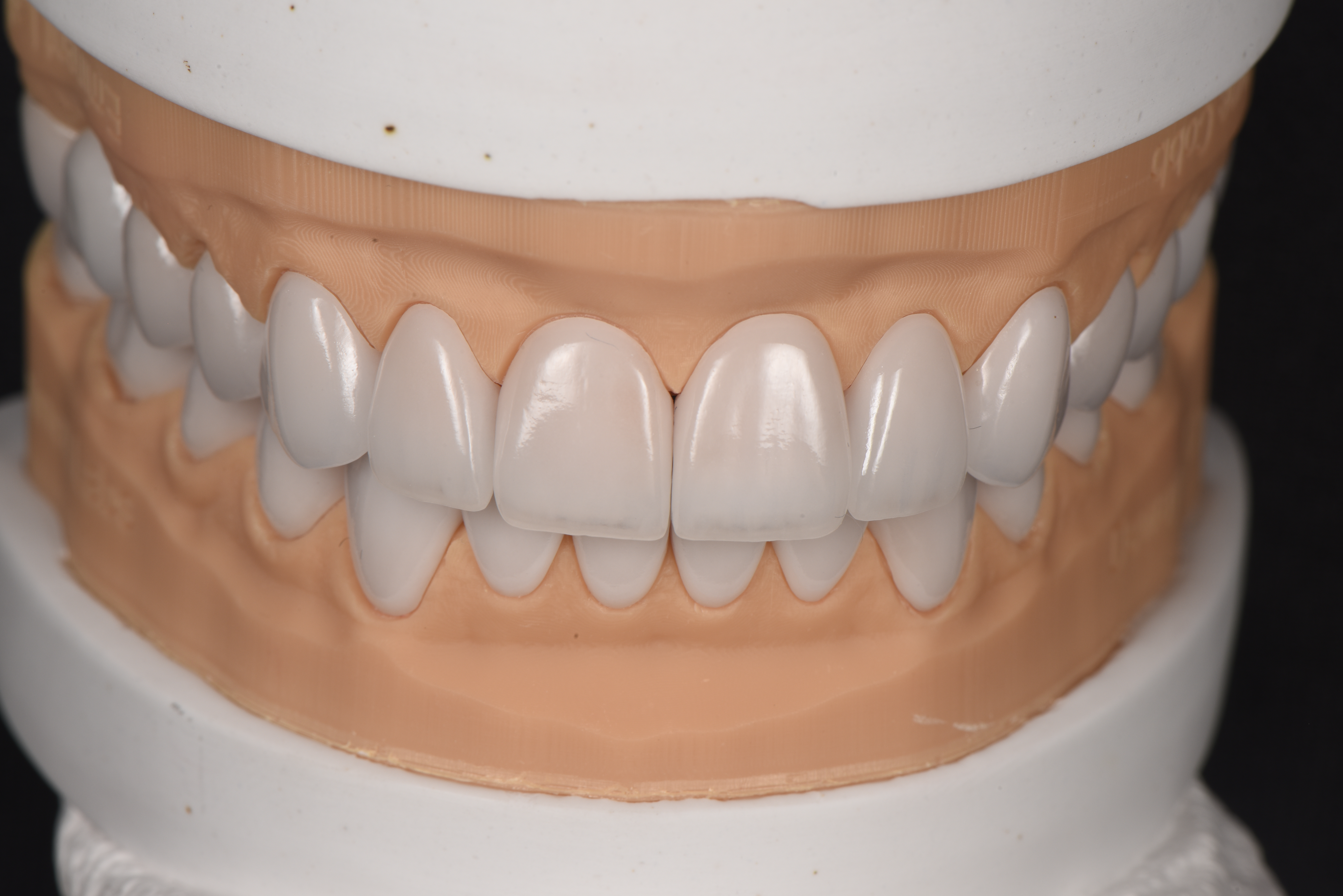
A beautiful smile does not exist in isolation. It must harmonize with your entire facial architecture and complexion. Customization transforms a generic result into a bespoke masterpiece.
Dentists use principles of visual design to balance your facial features. Changing the angles and length of your teeth can alter how others perceive your face shape.
Round Faces: These faces benefit from longer, slightly more angular tooth shapes. The added length creates a vertical illusion, offering a slimming effect.
Square Faces: Strong jawlines require softer, rounded tooth edges. The gentle curves help balance the sharp, angular facial features.
Heart-Shaped Faces: These typically pair best with shorter, slightly rounded shapes. This style avoids drawing excess attention away from the cheekbones.
Oval Faces: Oval structures typically suit square-shaped teeth well. Wider teeth add horizontal volume, widening the smile to balance facial proportions.
Selecting the right shade demands a sophisticated understanding of color theory. Choosing the brightest white available often results in an artificial, jarring appearance.
We recommend following the "Sclera Rule". Your chosen shade should never be whiter than the whites of your eyes. Breaking this rule creates the dreaded artificial "chiclet" look. It immediately signals to observers that your teeth are fake.
Skin tone heavily influences color perception. Cooler skin tones pair exceptionally well with brighter, icy white shades. Conversely, warmer skin tones require slightly creamier shades. Adding subtle surface texture also helps the restoration integrate naturally with warm complexions.
Remember translucency gradients. Natural teeth are never one solid color. They appear more opaque and yellowish near the gumline due to underlying dentin. They transition to a highly translucent, slightly bluish or grayish hue at the biting edge. Your master ceramist must replicate this natural gradient.
Understanding potential failures helps you advocate for your own care. Cosmetic dentistry carries specific clinical risks. Recognizing these risks allows you to choose providers who actively avoid them.
Many high-volume clinics rely heavily on pre-fabricated or milled CAD/CAM systems. These machines mill blocks of ceramic rapidly. While efficient, these milled blocks lack individual characterization unless a ceramist hand-layers them afterward. Accepting generic shapes results in a monochromatic, lifeless smile.
Poorly fitted restorations leave microscopic ledges at the gumline. Plaque accumulates rapidly on these ledges. You cannot brush or floss this bacteria away. This accumulation leads to chronic gingivitis, foul breath, and underlying decay. Precision fit remains the most critical biological factor.
Your jaw moves in complex patterns during chewing and speaking. Failure to account for your unique bite path causes disastrous results. Premature contacts place excessive localized stress on the ceramic. This stress inevitably leads to chipping, fractures, or complete debonding.
You can mitigate these risks by demanding a strict clinical protocol. Never approve the final fabrication without testing the design first.
Clinical Risk | Negative Outcome | Required Mitigation Step |
|---|---|---|
Poor Aesthetics | Artificial, flat appearance | Require a physical diagnostic "wax-up" model before starting. |
Improper Fit | Gum disease and decay | Use magnification loupes and premium impression materials. |
Patient Dissatisfaction | Disliking the final shape/length | Mandate a temporary "mock-up" trial phase in the mouth. |
Your results rely heavily on the hands executing the treatment. Vetting your clinical team requires asking direct, technical questions. Do not rely solely on social media followers or glossy waiting rooms.
Always request extensive before-and-after portfolios. Look past the most dramatic transformations. Ask to see cases featuring natural tooth structures and facial types similar to yours. Pay close attention to the gum tissue in the "after" photos. The gums should look tight, pink, and healthy, never red or swollen.
Ask the dentist who fabricates their restorations. Top-tier dentists partner with high-end, dedicated master ceramists. They do not use mass-production regional labs. The ceramist acts as the co-architect of your smile. You want an artist meticulously layering the ceramic, not an assembly line worker.
Unexpected issues sometimes occur despite perfect planning. Clarify the clinical protocol if a fracture happens within the first year. Ask what happens if the final shade does not match the approved trial mock-up. A reputable provider stands behind their craftsmanship and outlines revision policies transparently.
Bring this numbered checklist to your initial consultation. The best dentists welcome these questions enthusiastically.
Do they perform a comprehensive bite analysis and occlusal screening?
Do they discuss gum symmetry and potential gingival contouring alongside the treatment?
Are they completely transparent about the exact amount of natural enamel removal required?
Do they mandate a trial phase using temporary materials before finalizing the ceramics?
Can they explain why they recommend a specific material for your unique bite?
Choosing the correct smile makeover involves navigating a complex intersection of clinical and aesthetic variables. You must select the appropriate ceramic material, balancing flexibility and strength. Insist on individualized aesthetic mapping to ensure the shapes compliment your facial architecture.
Furthermore, rigorously vet your clinical team. Understand the critical role the master ceramist plays in your final outcome. While the upfront investment in high-quality, custom-layered ceramics is higher, the return on investment is clear. You gain predictable durability, biological harmony, and a deeply natural appearance.
We encourage you to take the next step confidently. Schedule a formal consultation with a vetted cosmetic dentist. Bring your checklist, ask about material specifications, and request a personalized smile design assessment today.
A: They typically last between 10 and 15 years with excellent oral hygiene. Many cases exceed 15 years if the patient avoids excessive bite stress. While highly durable, they are not strictly permanent. You will eventually require replacement due to natural gum recession or mechanical wear over time.
A: Yes, but you must take precautions. Bruxism places immense stress on ceramics. Your dentist will likely recommend stronger materials like Lithium Disilicate (E-max). You must also commit to wearing a custom-fitted protective night guard every time you sleep to prevent catastrophic chipping.
A: Ceramic offers superior stain resistance, longer lifespan, and better light-reflecting properties compared to composite resin. However, composite bonding costs less initially and requires minimal to zero enamel removal. Ceramic is a permanent choice for ultimate aesthetics, while composite serves as a reversible, budget-friendly alternative.
A: No, when performed correctly, they do not ruin teeth. However, the process usually requires shaving away a thin layer of healthy enamel (0.3mm to 0.5mm). Because enamel does not grow back, this makes the procedure irreversible. You commit your teeth to needing restorations for life.


