


Views: 0 Author: Site Editor Publish Time: 2026-08-22 Origin: Site


While CAD/CAM milling dictates the initial geometry of a dental prosthesis, the thermal processing phase ultimately governs its clinical success. Poor marginal fit and structural failure often originate in the furnace, not the mill. Zirconia requires a precise volumetric shrinkage, typically 20 to 25 percent, to achieve full density. Any deviation in the time-temperature curve causes asymmetrical shrinkage. This thermal imbalance directly leads to seating issues, occlusal discrepancies, or latent micro-cracks. For dental laboratories and digital practices evaluating new furnaces or workflows, understanding how different sintering protocols impact the dimensional stability of a zirconia restoration is critical. You must minimize remakes while ensuring predictable clinical outcomes. We will explore how conventional and fast cycles influence marginal adaptation. You will learn the hidden risks of aggressive thermal gradients. Finally, we will provide actionable evaluation criteria to protect your fabrication quality and safeguard patient health.
Sintering protocols directly control the predictable 20-25% volumetric shrinkage required for accurate marginal adaptation.
While fast-sintering workflows increase lab throughput, they require rigorous thermal gradient control to prevent distortion, especially in multi-unit cases.
Furnace calibration, cooling phase management, and restoration placement within the chamber are as critical to final fit as the maximum holding temperature.
Evaluating a sintering strategy requires balancing turnaround time expectations with the structural limits of specific zirconia generations (3Y-TZP vs. 4Y/5Y-TZP).
The transition from a milled unit to a clinical-ready prosthesis involves massive physical changes. We start with the chalky, fragile "green state." You place this milled material into a high-temperature environment for densification. During this cycle, the material undergoes a significant volumetric shrinkage. It typically contracts by a quarter of its original size. Consistent heating ensures this shrinkage happens evenly. Inconsistent heating translates directly to unpredictable shrinkage rates. You cannot afford asymmetrical contraction in high-precision dentistry.
Distorted margins create severe clinical complications. They compromise the biological seal. When margins do not fit perfectly, they expose the underlying tooth structure. This exposure leads to rapid cement dissolution over time. Microleakage then invites bacteria, causing secondary caries beneath the prosthesis. The patient ultimately suffers from sensitivity, recurrent decay, and premature failure of the treatment.
You must also consider the immediate financial impact of these remakes. A single seating failure of a zirconia crown restoration eats into your profit margins quickly. The chair time wasted on a failed try-in is incredibly costly. The same logic applies to a highly precise zirconia inlay onlay. If you adopt a faster workflow that yields a 10 percent remake rate, it becomes a net negative for lab profitability. Raw processing speed means nothing without clinical accuracy.
We define "accuracy" by strict clinical standards. Success means achieving a marginal gap consistently below the accepted clinical threshold. This threshold sits securely between 100 and 120 µm. Anything larger risks long-term mechanical and biological failure. Your thermal strategy must guarantee this metric every single time.
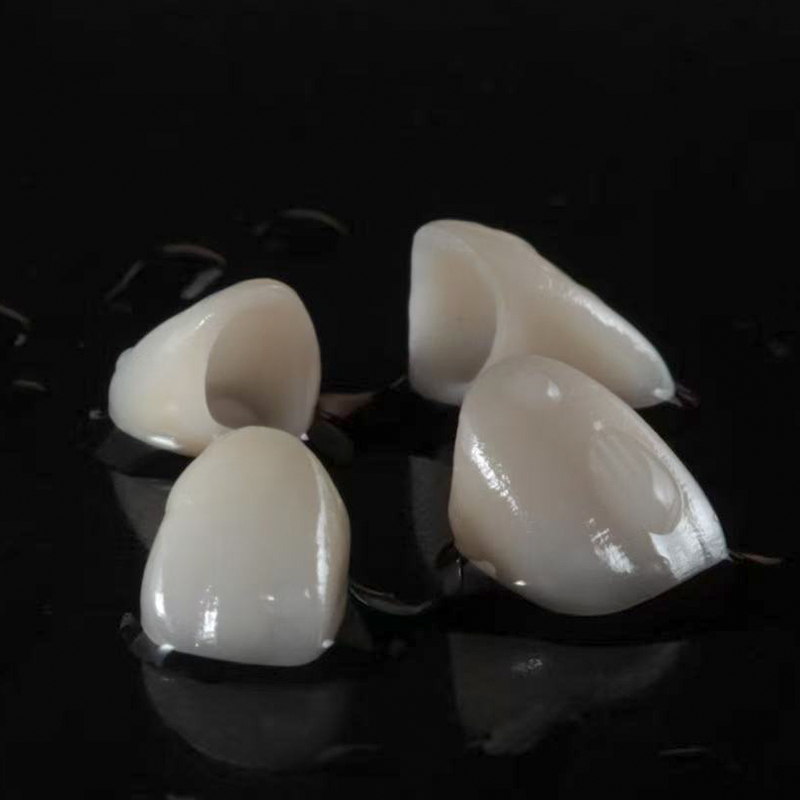
Dental professionals evaluate three primary thermal processing strategies. Each approach impacts the final fit differently. You must choose the protocol that aligns with your specific material and case requirements.
Comparison Chart: Zirconia Sintering Workflows
Protocol Type | Cycle Duration | Primary Use Case | Risk Level for Distortion |
|---|---|---|---|
Conventional Sintering | 10 to 16 Hours | Long-span bridges, highly translucent zirconia, high-volume batches | Low |
Speed / Fast Sintering | 2 to 4 Hours | Same-day digital workflows, single crowns, short-span bridges | Moderate |
Ultra-Fast Sintering | Under 2 Hours | Chairside single units, specific speed-certified materials | High |
Conventional sintering remains the industry baseline. These cycles typically run 10 to 16 hours. They provide maximum dimensional stability. Heat distributes uniformly across the entire prosthetic. You should use conventional cycles for massive structures. Highly translucent materials also require these slow phase transformations. Slow heating ensures optimal yttria distribution and flawless light transmission.
Speed sintering offers a strategic compromise. These cycles run between two and four hours. Dental labs use them frequently for same-day digital zirconia restoration workflows. They require optimized heating elements. You must prevent localized cold spots within the chamber. Cold spots cause uneven densification and warping during shrinkage. When managed properly, speed cycles deliver excellent clinical results for single units.
High-speed or ultra-fast sintering pushes material limits. These cycles finish in under two hours. You must strictly limit this method to single units. You also need specific material brands certified for rapid cycles. It carries the highest risk of thermal shock. The equipment must have precise ramping capabilities. Without strict temperature control, the core of the material will fail to densify completely.
Rapid temperature ramps pose a direct threat to accuracy. During aggressive heating, the exterior of the unit densifies much faster than the interior core. This temperature gradient generates massive internal stresses. The outside shrinks while the inside remains expanded. These stresses inevitably lead to intaglio distortion. You will notice the prosthesis rocking on the die during quality control. The margins will not seal perfectly. A slow, controlled climb allows the entire mass to shrink simultaneously. This synchrony preserves the intaglio adaptation.
Mass plays a massive role in thermal dynamics. A bulky zirconia bridge restoration reacts differently than a single anterior crown. Full-arch or multi-unit cases cannot tolerate aggressive thermal gradients. They act as large heat sinks. Varying thicknesses exist between thick pontics and narrow connectors. They demand careful, uniform processing. You must evaluate the absolute necessity of slow cooling phases. Slow cooling prevents catastrophic warping in these long-span cases. Rushing the cooling phase on a four-unit bridge guarantees a poor fit.
You must address phase stability when evaluating speed protocols. Does fast sintering trap the weaker monoclinic phase? Clinical evidence shows it can if the cycle lacks proper holding times. You need adequate time at the peak temperature. This dwell time ensures the material achieves the desired tetragonal or cubic phase. Uneven densification directly correlates to reduced flexural strength. The final product might look visually acceptable. However, it will likely fail under heavy occlusal load. True accuracy means preserving the mechanical integrity engineered by the material manufacturer.
Troubleshooting Guide for Sintering Defects
Defect Observed | Likely Thermal Cause | Recommended Action |
|---|---|---|
Rocking on the die | Uneven heating ramp or cold spots in chamber | Reduce heating rate; check element condition. |
Open margins | Incomplete densification (peak temp too low) | Verify peak temperature; run a calibration cycle. |
Micro-cracking in connectors | Cooling phase was too rapid | Extend cooling duration; do not open furnace early. |
Opaque or milky appearance | Insufficient holding time at peak temperature | Increase dwell time for proper phase transformation. |
Achieving predictable accuracy requires mastering your daily workflow. Equipment degrades over time. Human error also introduces variables. You must proactively manage these implementation risks.
Furnace Calibration Drift: This remains the hidden cause of accuracy loss. Heating elements, such as Molybdenum Disilicide, age and degrade over months of use. The digital display might read 1500°C. However, the chamber reality might only be 1450°C. You must use routine Process Temperature Control (PTC) rings. They ensure the furnace operates accurately.
Positioning in the Crucible: Placement drastically alters thermal dynamics. You cannot place prosthetics too close to the heating elements. Overloading the tray also disrupts uniform heat flow. Both mistakes cause asymmetrical shrinkage. They lead to unpredictable seating failures later.
The Cooling Phase Danger: Many technicians misunderstand this critical phase. Most distortions and micro-cracks actually occur during rapid cooling. They rarely happen during the heating ramp. You face a huge risk by manually opening furnaces too early. Trying to save thirty minutes here ruins the entire batch.
Best practices dictate standardizing your chamber loading procedures. Place bulky units in the center. Keep delicate single units away from the direct radiant heat of the elements. Never stack units unless using specialized, approved crucibles.
You need a logical framework for selecting a strategy. Follow these best practices to ensure your equipment matches your clinical goals.
First, verify material and equipment compatibility. Your chosen furnace must exactly replicate specific time-temperature curves. Your material manufacturer mandates these specific curves. Avoid generic, "one size fits all" cycles. They compromise structural integrity. If you use 5Y-TZP materials, your furnace must handle the precise cooling requirements for high-translucency stability.
Next, assess your daily case volume against turnaround demands. High-volume labs with standard turnarounds should invest in high-capacity conventional furnaces. These machines provide unmatched reliability for overnight batches. Conversely, premium same-day workflows demand highly controlled environments. You need programmable speed-sintering furnaces. They must feature advanced cooling fans and intelligent temperature monitoring.
Finally, look for specific equipment features. You want automated thermal calibration functions. You need even heat distribution across the entire chamber. Furnaces utilizing three or four distinct heating elements perform best. Ensure the system offers customizable multi-stage ramping and cooling programs. A rigid furnace limits your ability to adapt to newer material generations.
We must recognize a crucial clinical reality. Accuracy in CAD/CAM milling remains only a theoretical advantage. It becomes real only after successful thermal processing. A perfectly milled margin means nothing if it distorts in the furnace.
Speed protocols certainly offer undeniable business advantages. They increase daily output and enable same-day dentistry. However, they drastically narrow your margin for error. Predictability requires strict alignment. You must pair your specific material generation with a rigorously calibrated thermal cycle.
Always prioritize dimensional stability and clinical safety. Do not chase raw processing speed at the expense of baseline lab protocols. Secure the final fit first. By mastering your heating gradients, controlling your cooling phases, and maintaining strict equipment calibration, you guarantee the long-term success of every case.
A: Yes, if the temperature ramp rate exceeds the material's ability to transfer heat uniformly. This causes the exterior to shrink faster than the interior, leading to distortion. Modern speed-certified zirconia paired with a calibrated furnace mitigates this risk.
A: Generally, no. Large restorations have varying thicknesses between pontics and connectors. They require slow, uniform heating and cooling to shrink evenly. Rushing this process causes catastrophic thermal shock or warping. Always use conventional cycles for long-span bridges.
A: Industry best practice suggests using PTC (Process Temperature Control) rings or electronic calibration tools at least once a month. You should also calibrate immediately whenever consistent seating issues or opacity variations are observed in milled restorations.


