


Views: 0 Author: Site Editor Publish Time: 2026-09-28 Origin: Site


Choosing the right dental lab outsourcing partner can directly influence restoration quality, communication efficiency, case delivery reliability, and the overall experience of working on complex patient cases. For dental clinics and practitioners, outsourcing is not simply about finding a laboratory that can manufacture restorations. It is also about building a stable cooperation process that supports accurate case communication, predictable production, and consistent technical execution.
Before starting a trial order, dental clinics should evaluate several areas together, including technical capability, restoration experience, material options, digital workflow, quality control, communication procedures, and production reliability. A laboratory may be able to complete a single case successfully, but long-term cooperation requires consistency across different restoration types and repeated orders.
Shenzhen Lezy Jumei Dental Medical Co., Ltd. provides professional dental laboratory services for global dental professionals, including custom zirconia crowns, Malo Bridge dental lab solutions, custom porcelain veneers, and removable denture dental lab services. For clinics considering a new outsourcing partner, a carefully planned trial order is an effective way to evaluate both restoration quality and the laboratory’s overall cooperation process before moving to regular case submission.
Dental lab outsourcing means dental clinics or dental professionals cooperate with an external dental laboratory to manufacture customized restorations and prosthetic products. Instead of completing every laboratory procedure internally, clinics can submit case information, digital scans, impressions, prescriptions, shade requirements, and other technical instructions to a professional dental lab.
The laboratory then manages the production process according to the case requirements. Depending on the restoration type, this process may include case review, digital design, material selection, manufacturing, finishing, inspection, and final preparation before shipment. For clinics handling different restoration categories, outsourcing provides access to specialized technical capabilities without requiring every process to be maintained in-house.
A reliable dental lab outsourcing partner can help clinics expand restoration capabilities, access CAD/CAM technology, improve production flexibility, handle complex restoration cases, and support changing case volumes. This is particularly useful for clinics that treat a mix of fixed restorations, aesthetic cases, implant-supported restorations, and removable prosthetics.
For example, one clinic may require custom zirconia crowns for routine restorative cases, custom porcelain veneers for aesthetic treatments, Malo Bridge dental lab support for complex implant cases, and removable denture dental lab services for prosthetic patients. Working with a laboratory capable of handling several categories can simplify case management and reduce the need to coordinate with multiple suppliers.
For international dental clinics, outsourcing also requires careful attention to communication and workflow. Because the clinic and laboratory may operate in different locations, clear case information, responsive communication, reliable production procedures, and organized shipping become especially important. This is why clinics should evaluate the complete cooperation process rather than judging a dental lab only by price.
The first step is checking whether the dental lab has experience with the restoration types your clinic regularly requires. Different dental cases require different technical skills, materials, design methods, production processes, and finishing techniques. A laboratory that performs well with one type of restoration may not necessarily have the same level of experience with another.
A capable dental laboratory should have experience with products such as custom zirconia crowns, full contour zirconia restorations, implant crowns, dental bridges, custom porcelain veneers, removable dentures, and Malo Bridge restorations. For clinics offering multiple treatment options, this broader capability can make outsourcing easier because different cases can be handled through a more consistent cooperation process.
Product range should not be evaluated only by checking whether a laboratory lists a particular restoration on its website. Clinics should also consider whether the lab appears to understand the technical differences between the products it offers. A zirconia crown, porcelain veneer, removable denture, and implant-supported bridge each place different demands on design, materials, technician experience, finishing, and communication.
During a trial order, dental clinics can use one or several representative cases to evaluate how the laboratory handles instructions, clarifies technical details, and responds to case-specific requirements. The final restoration is important, but the process leading to that restoration also provides valuable information about whether the laboratory is suitable for regular outsourcing.
For clinics, a broader product range can also reduce supplier fragmentation. Instead of maintaining separate relationships for crowns, veneers, dentures, and implant cases, a clinic may prefer a dental lab outsourcing partner that can manage several categories while maintaining consistent communication and case handling.
Custom zirconia crowns are widely used because they combine aesthetics, strength, and compatibility with digital dental workflows. However, successful zirconia restoration production depends on more than the zirconia material itself. Design accuracy, margin handling, milling, finishing, shade matching, occlusion adjustment, and final inspection all contribute to the quality of the finished restoration.
Before outsourcing zirconia crown cases, dental clinics should check the laboratory’s zirconia material options, CAD design workflow, shade matching process, finishing techniques, occlusion adjustment procedures, and quality inspection methods. These factors help indicate whether the laboratory has a complete production system rather than simply basic milling capability.
A professional dental lab should be able to handle customized crown designs based on digital scans, impressions, dentist requirements, and case-specific instructions. Clear communication regarding preparation requirements, margin design, shade information, and occlusal considerations is particularly important because small differences in case information can affect the final restoration.
For clinics planning regular custom zirconia crowns outsourcing, consistency should be a major evaluation point during the trial period. One good crown does not automatically prove that a laboratory can maintain the same quality across repeated cases. Clinics should consider whether design interpretation, finishing, communication, and production standards remain stable from one order to the next.
Trial cases can also help dental practices understand how the laboratory responds when case information is incomplete or when a technician needs additional clarification. A strong outsourcing partner should not simply proceed with uncertain information. It should have a clear process for requesting confirmation when necessary.
Digital workflow has become an important part of modern dental laboratory production. For clinics already using intraoral scanners or digital case management systems, the laboratory’s ability to receive and process digital files can significantly affect communication efficiency and production workflow.
Before choosing a dental lab outsourcing supplier, clinics should understand whether the laboratory supports digital impression files, CAD dental design, 3D modeling, CNC milling, digital quality inspection, and case tracking systems. The exact workflow may vary depending on the restoration type, but the key question is whether the laboratory can integrate digital information into its production process efficiently.
A digital workflow can improve communication between dentists and technicians because case information can be reviewed more clearly before production begins. Digital files also make it easier to discuss design details, identify potential issues, and maintain a more organized case history.
For international cooperation, digital case submission is especially useful because it can reduce dependence on physical impressions for suitable cases and shorten the time required to transfer information between the clinic and laboratory. This can make the overall dental lab outsourcing process more efficient when both sides have a clear digital workflow.
However, clinics should not evaluate a laboratory only by the equipment it uses. Technology is most valuable when it is supported by experienced technicians who understand how to interpret clinical information and convert it into an appropriate restoration design. The combination of digital tools and technician judgment is more important than equipment alone.
During a trial order, clinics can therefore evaluate both sides of the digital process: how efficiently the lab receives and reviews files, and how clearly technicians communicate if additional information is required.
Complex implant-supported restorations require a different level of technical experience compared with standard single-unit restorations. These cases often involve more detailed treatment planning, framework considerations, implant positions, occlusion, materials, and communication between the dentist and dental technician.
When selecting a Malo Bridge dental lab, dentists should evaluate previous complex case experience, implant restoration workflow, framework design capability, material selection, communication process, and final quality inspection. A laboratory experienced in these cases should understand that successful production depends on accurately interpreting clinical information and maintaining close communication throughout the case.
A Malo Bridge case is not a restoration that should be treated like a routine crown order. The laboratory needs sufficient information to understand the clinical requirements, and the clinic needs confidence that technicians can review the case before production begins.
Communication is particularly important in complex implant cases. If the laboratory identifies a potential design issue, missing file, unclear instruction, or technical limitation, it should communicate with the dentist rather than making assumptions. This type of interaction is an important sign of a professional Malo Bridge dental lab relationship.
For trial orders, requesting examples of similar completed cases can help clinics better understand the laboratory’s technical capability. The goal is not only to see whether the laboratory has produced this restoration type before, but also to understand how it manages the design and communication process.
Clinics that frequently handle advanced implant cases should pay particular attention to whether the lab can provide consistent support for complex work over time. A reliable outsourcing relationship should help make difficult cases easier to manage, not create additional uncertainty.
For patients focused on appearance, aesthetic restorations require more than basic manufacturing capability. The laboratory must consider tooth form, shade, translucency, surface texture, and the way the restoration integrates visually with surrounding teeth.
When evaluating custom porcelain veneers services, clinics should review tooth shape design, shade matching, surface texture, natural appearance simulation, and technician experience. These details can strongly influence whether the finished veneer appears natural and appropriate for the patient’s smile.
A professional dental lab should combine digital design technology with technician expertise. Digital tools can support design accuracy and communication, while experienced technicians contribute aesthetic judgment during finishing and characterization.
Custom porcelain veneers often require particularly detailed communication between dentists and technicians because aesthetic expectations vary between patients. Shade information, tooth proportions, surface characteristics, and the desired overall appearance may all need to be considered.
For clinics that regularly provide cosmetic dentistry, the laboratory’s aesthetic capability should be tested carefully before long-term cooperation. A trial order can help evaluate whether the lab follows aesthetic instructions consistently and whether technicians are responsive when additional clarification is needed.
The laboratory should also be able to handle aesthetic cases with the same level of organization used for other restoration types. Good appearance alone is not enough if communication is inconsistent or production is difficult to manage.
Quality control is essential when outsourcing dental cases. Before placing a trial order, dental clinics should ask how the laboratory manages inspection throughout the production process rather than assuming quality is checked only at the end.
Important areas to understand include production inspection steps, fit verification, material traceability, final quality checks, and case review procedures. A reliable laboratory should have a clear workflow from receiving case information through production and final shipment.
Quality control for dental restorations may involve multiple details. Depending on the case, technicians may need to verify whether the restoration matches the prescription, design information, shade request, dimensions, and other submitted requirements.
For international dental lab outsourcing, quality control becomes especially important because remakes or corrections can increase communication time, shipping costs, and treatment delays. Preventing avoidable problems before shipment is therefore valuable for both the clinic and laboratory.
A trial order gives clinics an opportunity to evaluate more than the final product. They can also assess how the laboratory handles case review, whether technicians request clarification when needed, how quickly issues are communicated, and whether documentation is organized.
If a clinic plans to send regular case volume, consistent quality management becomes even more important. The right partner should be able to follow a repeatable process across different technicians, restoration types, and order volumes.
Removable dentures require different technical processes compared with fixed restorations. Clinics that provide a wide range of prosthetic treatments should therefore evaluate whether a potential outsourcing partner has dedicated experience with removable cases.
When selecting a removable denture dental lab, clinics should review denture design experience, material options, fit adjustment process, base fabrication, artificial tooth arrangement, and finishing quality. These areas contribute to the overall function and appearance of the finished prosthesis.
Unlike many fixed restorations, removable dentures need to consider several factors together, including retention, comfort, occlusion, tooth arrangement, and the relationship between the denture base and oral tissues. This makes technician experience particularly important.
A capable laboratory should understand both functional requirements and patient comfort considerations. The clinic should also be able to communicate specific preferences or case requirements clearly to the technician.
During a trial order, dentists can evaluate whether the removable denture dental lab follows instructions carefully, asks appropriate questions, and provides a finished product that reflects the submitted case information.
For clinics providing comprehensive dental services, working with a laboratory that supports both fixed and removable restorations can simplify supplier management. It allows different types of patient cases to be handled through one established communication process rather than separate laboratory relationships.
A trial order is not only a product test but also a way to evaluate cooperation quality. A restoration may meet expectations, but long-term outsourcing can still become difficult if communication is slow, case submission is unclear, or production timelines are inconsistent.
Before starting cooperation, clinics should confirm communication channels, case submission process, expected turnaround time, revision procedures, shipping arrangements, and technical support availability.
Good communication helps prevent misunderstandings during restoration production. For example, if the laboratory needs additional information about shade, preparation, implant components, or design preferences, the clinic should receive that request early enough to respond before production continues.
A professional dental lab outsourcing partner should provide clear updates and respond efficiently when additional information is required. Clinics should also understand who they will communicate with, how case questions are handled, and how urgent issues are escalated.
Turnaround time should be evaluated realistically. Different restorations require different production processes, and more complex cases may need additional communication or confirmation. Instead of looking only for the shortest possible production time, clinics should consider whether the laboratory provides predictable and transparent timelines.
The trial order process is therefore a valuable test of the entire working relationship. Clinics can evaluate whether submitting the case is straightforward, whether the laboratory acknowledges requirements accurately, whether communication is timely, and whether the finished case is delivered according to expectations.
When comparing different dental laboratories, clinics should consider several factors together instead of focusing on price alone. A lower unit price may appear attractive, but it provides limited value if communication problems, inconsistent results, or frequent remakes create additional work for the clinic.
Technical capability should be evaluated according to the cases your clinic actually sends. If most of your workload consists of custom zirconia crowns, the laboratory should demonstrate strong zirconia production capability. If your clinic handles implant-supported restorations, experience with complex implant cases becomes more important. If aesthetic dentistry is a major service, custom porcelain veneers experience should receive greater attention.
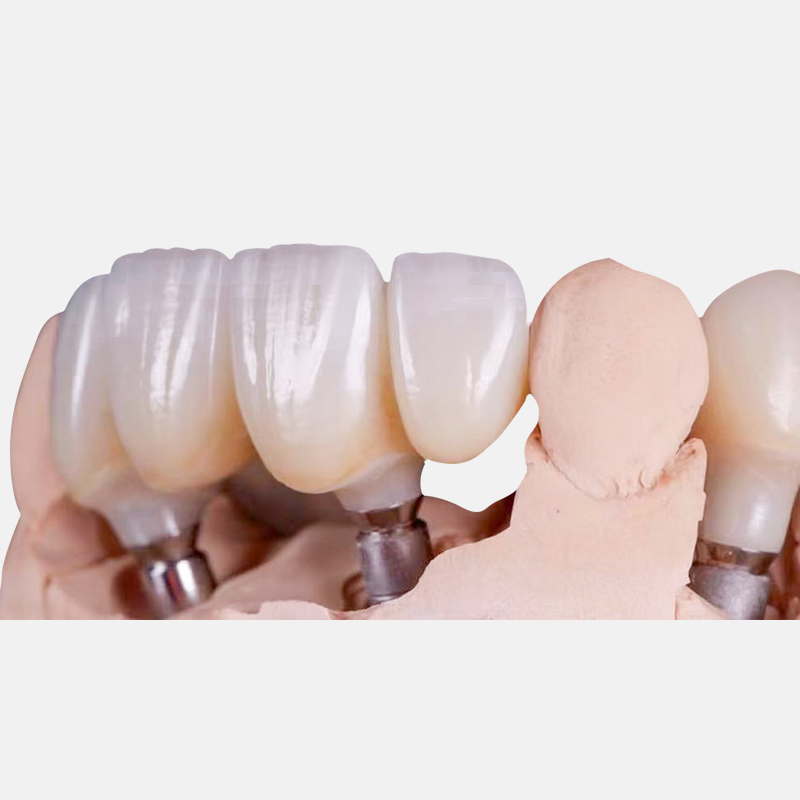
Material options are another consideration. The laboratory should clearly communicate the materials available for different restorations and help clinics understand which options are suitable for specific case requirements.
Digital workflow should also be reviewed, particularly for clinics using intraoral scanners. A laboratory that can receive and process digital cases efficiently may simplify routine communication and reduce unnecessary administrative steps.
Quality control, production capacity, communication, and custom service should then be considered together. The right dental lab outsourcing partner should be able to handle current case requirements while also supporting the clinic as case volume or service categories change.
Evaluation Factor | What to Check |
|---|---|
Technical Capability | Experience with crowns, bridges, veneers, dentures and implant cases |
Material Options | Zirconia, porcelain and other restoration materials |
Digital Workflow | CAD/CAM design and digital case processing |
Quality Control | Inspection procedures and case management |
Communication | Response speed and technical support |
Production Capacity | Ability to handle regular case volume |
Custom Service | Customization and special case requirements |
A trial order should therefore be treated as a practical evaluation period. Clinics can use it to compare restoration quality, case communication, responsiveness, production organization, and delivery performance before deciding whether to expand cooperation.
Shenzhen Lezy Jumei Dental Medical Co., Ltd. provides professional dental laboratory solutions for international dental clinics, dentists, and dental partners. Its service range covers different restoration needs, allowing clinics to outsource both routine and more specialized cases through one laboratory relationship.
The company provides customized dental restorations including custom zirconia crowns, Malo Bridge dental lab solutions, custom porcelain veneers, and removable denture dental lab services. This range allows dental professionals to manage fixed, aesthetic, implant-supported, and removable cases according to their treatment requirements.
For clinics outsourcing custom zirconia crowns, the ability to communicate case requirements clearly and maintain a structured production workflow is important for repeated cooperation. For aesthetic cases such as custom porcelain veneers, communication about shade, form, and appearance becomes particularly important.
Complex implant cases require a different type of cooperation. A Malo Bridge dental lab needs to understand detailed case requirements and maintain close communication with the dentist during production. Removable denture cases also require specialized technical handling because design, fit, tooth arrangement, and finishing all affect the final result.
Lezy Jumei combines professional technicians, digital production processes, and customized case support to help dental professionals manage outsourced restoration production. For clinics looking for a long-term dental laboratory partner, the company offers cooperation across multiple restoration categories rather than limiting support to one product type.
When starting cooperation, dental clinics can use a trial order to evaluate restoration quality, communication efficiency, case handling, and service responsiveness before increasing case volume.
Choosing a dental lab outsourcing partner requires careful evaluation of technical ability, restoration experience, quality control, communication, digital workflow, and production reliability. The best way to reduce uncertainty before long-term cooperation is to evaluate these factors through a carefully selected trial order.
Dental clinics should verify whether the laboratory can support the specific restoration categories they regularly need, including custom zirconia crowns, complex implant restorations, custom porcelain veneers, and removable dentures. They should also review how the laboratory receives case information, communicates technical questions, manages production, performs quality checks, and coordinates delivery.
Price is only one part of the decision. A reliable dental lab outsourcing relationship should help clinics manage cases more efficiently, access specialized technical capabilities, and maintain a more predictable restoration workflow.
Shenzhen Lezy Jumei Dental Medical Co., Ltd. provides customized dental laboratory services for global dental professionals across fixed, aesthetic, implant-supported, and removable restoration categories. For clinics considering a new outsourcing partner, a trial order provides a practical opportunity to evaluate whether the laboratory’s technical capability and cooperation process match their long-term requirements.
Dental lab outsourcing allows dental clinics to send restoration cases to an external laboratory for professional manufacturing and finishing services. It helps clinics access specialized technology and expand restoration capabilities.
When choosing a dental lab outsourcing partner, evaluate technical experience, restoration quality, communication process, materials, turnaround time, and quality control procedures.
A professional dental lab can provide crowns, bridges, veneers, dentures, implant restorations, and other customized dental products.
Custom zirconia crowns provide customized tooth restoration solutions with aesthetic appearance and suitable mechanical performance for many clinical applications.
Before ordering custom porcelain veneers, clinics should review the laboratory’s aesthetic design experience, shade matching process, technician skills, and case communication workflow.
A Malo Bridge dental lab should have experience with implant-supported restoration design, digital workflows, framework production, and detailed case communication.
A removable denture dental lab provides customized denture design, fabrication, finishing, and adjustment support according to dentist requirements.
Turnaround time depends on restoration type, case complexity, communication efficiency, and shipping arrangements. Clinics should confirm expected timelines before starting cooperation.


