


Views: 0 Author: Site Editor Publish Time: 2026-06-22 Origin: Site


Navigating cosmetic dentistry options can confuse anyone reaching the final evaluation stage. You have likely received treatment plans using terminology interchangeably. Conversely, promotional materials might present these terms as entirely different products. Linguistically and medically, these descriptors heavily overlap. Porcelain simply describes the ceramic material itself. Laminate and veneer describe the thin layered physical structure. However, modern cosmetic marketing changes this reality. Clinics often use "laminates" to indicate ultra-thin, minimal-prep variations. They use "veneers" to describe traditional, thicker ceramic restorations. Making the right choice protects your long-term oral health. It prevents unnecessary biological damage to healthy teeth. This article provides a straightforward clinical decision framework. We help you evaluate cosmetic proposals clearly. You will understand precise enamel reduction requirements. Ultimately, you will learn how to choose the right structural approach for your specific dental anatomy.
Terminology vs. Practice: A "Porcelain Laminate Veneer" and a "Porcelain Veneer" technically describe the same baseline treatment, but clinics often use "laminates" to denote ultra-thin (0.2mm) options (like Lumineers) and "veneers" for standard (0.5mm) options.
Enamel Preservation: Dental laminate veneers typically require little to no tooth shaving (enamel preparation), whereas traditional porcelain veneers require irreversible enamel removal.
Aesthetic Limitations: While ultra-thin laminates preserve tooth structure, they cannot easily mask severe discoloration without looking bulky. Traditional veneers offer superior opacity for masking dark stains.
Longevity & Investment: Both utilize highly durable, stain-resistant ceramics, but structural longevity depends entirely on the dentist’s case selection and preparation technique.
Both terms technically describe the exact same medical device at their core. They represent custom-made ceramic shells. Dentists bond them to the front surfaces of your teeth. These shells correct structural shapes, fix minor alignments, and improve overall color. The American College of Prosthodontists recognizes them all under the broad category of ceramic restorations. Decades ago, dental professionals used these descriptors interchangeably without any confusion.
How do modern providers differentiate them in clinical practice? A cosmetic dentist might quote you for a Porcelain Laminate Veneer. Usually, they mean an advanced, ultra-thin lithium disilicate restoration. Popular material brands include IPS e.max. These modern materials boast immense strength despite their extreme thinness. On the other hand, discussing traditional porcelain options implies a standard thickness. This standard approach requires physical space. The dentist must create this necessary space by reducing your natural tooth.
Relying on naming conventions alone poses significant risks for patients. We strongly advise a strict transparency check during your consultation. You should always ask your provider for exact technical specifications. You need to know if the procedure is prep or no-prep. You should also verify the specific brand or ceramic material they plan to use. A clear conversation eliminates confusing marketing fluff. It ensures you understand the true biological impact on your smile.
Assuming a higher price means a completely different medical procedure.
Failing to ask the dentist about the exact thickness of the proposed ceramic.
Not verifying the specific type of porcelain used by the dental laboratory.
Traditional restorations serve as the ultimate gold standard for dramatic smile makeovers. Their thickness typically ranges from 0.5mm to 0.7mm. This substantial profile provides incredible structural durability. It also offers unmatched aesthetic depth. Ceramists can layer multiple shades of porcelain within this space. This layering mimics the natural light reflection of human teeth perfectly.
However, this optimal thickness carries a permanent biological cost. Traditional preparation requires the irreversible removal of native enamel. A dentist usually shaves a fraction of a millimeter off the front tooth surface. This critical step ensures the final restoration sits absolutely flush against the gum line. Without this physical reduction, the ceramic would overhang the tooth. Overhanging margins trap bacteria easily. They lead directly to chronic gum inflammation and recurrent decay.
Dentists utilize this traditional approach for highly specific clinical indications. We recommend them for overcoming complex cosmetic challenges.
Masking deep intrinsic stains: Tetracycline staining or dead teeth require thick, opaque ceramic to block out dark underlying colors effectively.
Correcting moderate misalignment: Crowded teeth need physical reduction. The dentist must remove bulk to align the arch properly.
Closing significant gaps: Large diastemas demand thicker structural support to close wide spaces securely.
Implementation realities highlight highly predictable outcomes. Traditional methods offer excellent long-term retention. Clinical studies consistently show robust survival rates exceeding 15 years. However, this path requires a permanent biological commitment. Your prepared tooth will always require a protective ceramic covering.
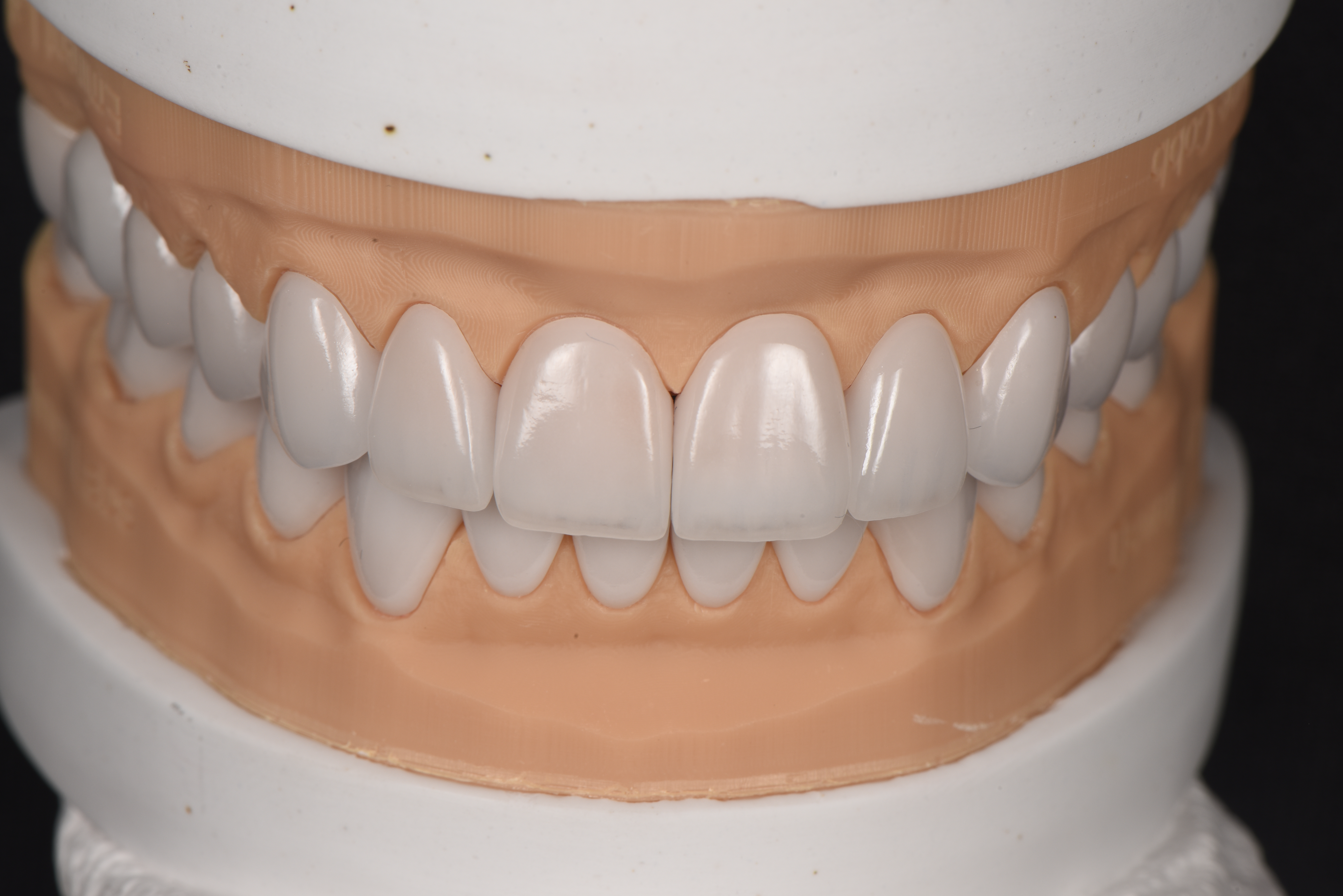
Ultra-thin options revolutionize conservative cosmetic dentistry completely. The defining thickness hovers roughly around 0.2mm to 0.3mm. Dentists often compare them to the delicate thickness of a contact lens. A Dental Laminate Veneer achieves structural integrity through advanced, modern fabrication techniques. They rely entirely on the strength of the underlying natural enamel once bonded.
The primary appeal lies in minimal preparation requirements. The process is often marketed as reversible or semi-reversible. It requires minimal to absolute zero enamel removal. We call this a "no-prep" approach. Many patients seek this route to preserve their natural tooth structure entirely. It drastically reduces post-operative tooth sensitivity.
Primary clinical indications suit very specific anatomical profiles. Not everyone qualifies for this conservative approach.
Patients with inherently small teeth, known clinically as microdontia.
Smiles featuring teeth pushed slightly inward or lingually inclined.
Correcting minor enamel chips or subtle surface discoloration.
Patients who remain highly averse to any irreversible enamel reduction.
Despite the biological benefits, serious adoption risks exist. Incorrect application leads to severe aesthetic failures. If a dentist applies no-prep laminates to normally sized teeth, problems arise quickly. The result can look distinctly thick and excessively bulky. Patients often describe this tragic outcome as a "chiclet-like" appearance. Furthermore, these restorations run a higher risk of aesthetic show-through. The highly translucent thin ceramic cannot easily mask underlying dark tooth shades. A gray tooth will simply look like a shiny gray tooth.
Evaluating a complex treatment plan requires objective clinical criteria. You must carefully match the physical restoration to your unique dental anatomy. Do not let marketing dictate your biological choices. We provide a direct comparative lens below to guide your decision-making process.
Diagnostic Criteria 1: Existing Tooth Color. Severe staining dictates your choices heavily from the start. Darkly discolored teeth require the robust thickness of traditional porcelain. Thin laminates will fail here. Minor shade adjustments offer much more flexibility. A minimal-prep approach handles subtle color shifts beautifully. It creates a highly natural, glowing aesthetic.
Diagnostic Criteria 2: Tooth Position and Arch. Protruding or crowded teeth must use traditional preparations. The dentist must remove physical tooth structure to align them properly within the arch. Adding bulk to already crowded teeth ruins the facial profile. Conversely, recessed or inwardly inclined teeth are ideal candidates for ultra-thin options. They naturally provide the necessary physical space for the added ceramic volume.
Diagnostic Criteria 3: Reversibility vs. Final Aesthetic. You must weigh two deeply competing desires. Everyone naturally wants to preserve their natural tooth structure. However, avoiding necessary preparation can risk a compromised, bulky aesthetic. You must balance anatomical conservatism with realistic visual outcomes. Sometimes, removing 0.5mm of enamel guarantees a perfect smile for decades.
Below is a diagnostic summary table. It helps you visualize these crucial differences quickly.
Diagnostic Factor | Traditional Porcelain Veneers | Ultra-Thin Laminate Veneers |
|---|---|---|
Enamel Reduction | 0.5mm - 0.7mm | 0.0mm - 0.3mm |
Stain Masking Ability | Excellent for severe intrinsic stains | Poor for deep discoloration |
Ideal Anatomical Fit | Crowding, large gaps, dark teeth | Small teeth, inward-leaning arch |
Reversibility | Strictly irreversible | Potentially reversible |
Do not pay a financial deposit without asking hard clinical questions. We equip you with a skepticism-friendly checklist below. This protects your substantial investment. It also protects your foundational biological health.
Margin Integrity Assessment: Ask the provider how they plan to manage the margins. The margin is where the ceramic shell meets your natural gum tissue. A no-prep option adds physical volume to the outside of the tooth. Without incredibly careful contouring, this creates an artificial ledge. Such ledges trap microscopic plaque easily. Plaque traps lead directly to chronic gum inflammation, bleeding, and eventual bone loss.
Material Selection: Clarify the exact ceramic brand and material type. Ask if they use traditional Feldspathic porcelain or modern pressed ceramics. Pressed options like IPS e.max offer incredible fracture resistance. Feldspathic options offer unmatched, natural-looking translucency but are more fragile before bonding. The chosen material directly impacts both daily strength and aesthetic depth.
The Wax-Up/Mock-Up Phase: Never approve a final restoration without a clinical test drive. You must demand a temporary physical or digital mock-up. You must see the projected thickness in your own mouth. You must verify the final contour against your lips and face shape. A diagnostic mock-up prevents costly aesthetic surprises. It ensures you and your dentist share the exact same visual goals.
Wear the temporary mock-up for a few days to test phonetic speech.
Take photos in different lighting conditions, including natural sunlight.
Check if your lips catch on the new teeth when smiling widely.
Making an informed cosmetic dental decision requires clarity over marketing jargon. The choice between standard and minimal-prep options demands strict clinical objectivity.
Focus on Biology: Choosing between a porcelain laminate veneer and a standard porcelain veneer is not about shopping for a "better product." It depends entirely on your case-specific biological realities.
Analyze Proportions: Use your existing tooth alignment to dictate the prep style. Crowded teeth usually demand traditional preparation.
Demand Proof: Always insist on a physical mock-up before committing to any irreversible enamel reduction.
Seek True Experts: Prioritize finding a board-certified prosthodontist or highly credentialed cosmetic dentist. Avoid providers who aggressively push a single brand of minimal-prep veneer regardless of your bite dynamics.
Take the next logical step by booking comprehensive clinical consultations. Bring your diagnostic checklist to the appointment. Demand a thorough bite analysis. Your final aesthetic success relies on finding a provider who strictly respects your underlying dental anatomy.
A: No. A composite veneer uses a tooth-colored resin material sculpted directly onto your tooth during one visit. A true laminate veneer utilizes fired ceramic porcelain fabricated carefully in a dental laboratory. Porcelain resists daily stains far better. It typically lasts twice as long as composite resin, though it requires a higher initial investment.
A: Both can easily last 10 to 15 years or more. Longevity is rarely dictated by the thickness of the ceramic material itself. Instead, long-term survival depends entirely on the dentist's bonding process, the quality of the enamel preservation, and your daily bite dynamics. Proper moisture isolation during bonding is absolutely critical.
A: They often cost the same or slightly more. While ultra-thin options require less chair-time for tooth preparation, they demand highly specialized lab fabrication techniques. Working with 0.2mm lithium disilicate requires master ceramists. You are paying for advanced laboratory artistry, not just the clinical time spent in the dental chair.
A: Marketing often claims ultra-thin minimal-prep options are fully reversible. However, you should view this critically. Even with zero enamel shaving, removing bonded ceramic is difficult. The mechanical bonding removal process almost always alters or slightly damages the microscopic surface of your natural enamel. True biological reversibility is clinically rare.


