


Views: 0 Author: Site Editor Publish Time: 2026-08-22 Origin: Site


Insufficient occlusal clearance often triggers severe prosthetic complications. Dentists face material fractures, poor emergence profiles, and frustrating lab remakes when space is lacking. We must establish rigorous preoperative planning parameters early. You ensure your chosen restorative material and retention method perfectly align against available vertical space. This early diligence prevents costly failures downstream. We offer a strictly evidence-based framework here. You will learn how to evaluate spatial requirements and select the right retention types. We also explore how modern digital workflows guarantee predictable outcomes for every single case. Read on to master the math of vertical clearance. You will protect your restorative investments and elevate patient satisfaction. Proper spatial planning removes the guesswork from complex rehabilitations. We provide actionable strategies to handle these daily clinical challenges. Dentists encounter unique constraints when restoring posterior quadrants. We outline a clear path to minimize clinical stress.
Baseline Metrics: Cement-retained restorations typically require 7–8 mm of vertical restorative space, while screw-retained restorations can be successfully executed with as little as 4–5 mm.
Material Variables: Monolithic materials like zirconia demand less occlusal reduction compared to layered porcelain-fused-to-metal (PFM) or lithium disilicate.
Space Management: Utilizing an implant crown with custom abutment or specific Ti-base configurations provides critical flexibility when vertical dimension is compromised.
Digital Predictability: CAD/CAM integration mitigates risk by validating interocclusal clearance before the final milling phase.
Defining interarch distance represents your first major clinical hurdle. You measure the vertical distance from the implant platform to the opposing dentition. This exact measurement must happen during the initial treatment planning phase. Proper assessment ultimately dictates your entire prosthetic path. We use periodontal probes or specialized calipers to verify these dimensions accurately. You cannot rely on visual estimates when planning these complex restorations. The math remains completely unforgiving.
Biomechanical risks multiply rapidly when you lack adequate vertical space. We see several common mechanical failures in these compromised scenarios. First, unfavorable crown-to-implant ratios dramatically increase the risk of abutment screw loosening. The leverage forces simply overwhelm the retaining screw. Second, overly thin restorative materials invite catastrophic fractures under normal occlusal load. Patients exert tremendous force during regular mastication. Finally, shortened abutment walls cause frequent loss of retention in cemented cases. The cement simply cannot hold onto a microscopic vertical wall.
Poor spatial planning carries steep penalties for both clinics and patients. You lose valuable clinical chairtime performing endless occlusal adjustments. These forced adjustments often ruin the intended anatomy. Compromised aesthetic outcomes frustrate your patients and damage your clinical reputation. Furthermore, the financial burden of laboratory remakes heavily impacts your practice profitability. You must account for the biological width and the soft tissue thickness as well. These elements heavily influence the final position of the prosthetic margin. We frequently observe cases where implants are placed too shallowly. This shallow placement severely restricts the restorative space above the platform. We urge surgeons and restorative dentists to communicate early. You must determine the restorative space before the surgical drill ever touches bone. We recommend utilizing surgical guides to enforce these strict spatial boundaries.
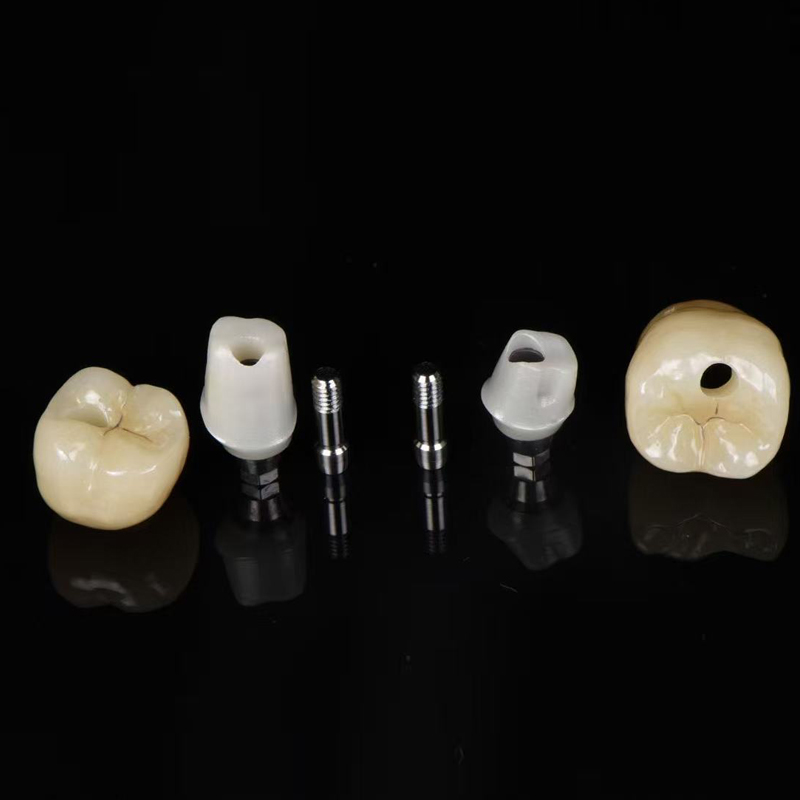
Choosing a specific retention protocol directly depends on your available vertical dimension. We evaluate two primary methods for securing the final prosthesis. Cement-retained restorations typically require a strict minimum of 7 to 8 mm of clearance. We break this requirement down into specific anatomical components. You need roughly 1 to 2 mm just for occlusal material thickness. You also need a minimum abutment height of 5 mm. This specific height ensures adequate retention and optimal resistance form. The transmucosal collar height consumes the remaining available space. These higher space requirements pose massive challenges in tight posterior zones. You also face biological risks from residual subgingival cement. Unnoticed cement acts as a primary catalyst for peri-implantitis.
Cemented restorations still hold value in highly aesthetic anterior zones. They allow you to correct severe angulation issues effortlessly. However, the space required for proper abutment height remains non-negotiable. You cannot simply shorten a custom abutment to 3 mm and expect long-term retention. The cement will eventually fail under shear forces.
Screw-retained restorations demand significantly less vertical room. They operate quite successfully within a strict 4 to 5 mm minimum clearance. This method elegantly eliminates the separate cement layer entirely. You simply do not need tall abutment retention walls to secure the crown. You only need vertical space for the transmucosal component, the restorative material, and screw head clearance. This efficiency makes screw-retained solutions the definitive choice for limited interocclusal space. When crafting an implant crown in a tight molar region, you should default to screw retention. You save precious millimeters while gaining easy retrievability. Retrievability becomes incredibly valuable if complications arise years later. We see a massive industry shift toward screw-retained prosthetics for these exact reasons. You streamline the delivery process and enhance patient safety simultaneously.
Restorative materials behave very differently under heavy occlusal forces. You must match your chosen material to the exact clearance available. We analyze three popular options based on their spatial demands. You must communicate your material choice clearly to the dental technician. They need to adjust their digital parameters based on the specific material's fracture toughness.
Monolithic zirconia offers truly exceptional durability in extremely tight spaces. It requires as little as 1.0 to 1.5 mm of occlusal thickness. Its remarkably high flexural strength makes it your primary choice for restricted posterior regions. You rarely worry about material fracture when utilizing high-quality monolithic zirconia. However, you must still ensure adequate thickness around the screw access hole. This area represents the weakest point of any screw-retained restoration.
Lithium disilicate (e.max) offers beautiful translucency and aesthetics. However, it demands slightly more vertical room to survive. You need 1.5 to 2.0 mm of occlusal clearance here. This extra thickness prevents dangerous fractures under heavy occlusal loads. We reserve this material mostly for anterior and premolar regions. You must bond it properly to ensure maximum strength.
Porcelain-Fused-to-Metal (PFM) remains a highly reliable traditional option. However, it requires 2.0 mm or more of vertical space. You must accommodate both the rigid metal substructure and the aesthetically layered feldspathic porcelain. Reducing this thickness severely compromises core strength and aesthetic masking. We advise against using PFM in tightly constrained molar regions.
Restorative Material | Minimum Thickness | Primary Clinical Indication |
|---|---|---|
Monolithic Zirconia | 1.0 - 1.5 mm | Posterior regions lacking vertical height |
Lithium Disilicate | 1.5 - 2.0 mm | Anterior cases needing high aesthetics |
PFM | 2.0+ mm | Cases allowing deep occlusal reduction |
You align the restorative material directly with patient habits and anatomy. Severe bruxism dictates the use of monolithic zirconia. Hard millimeter constraints always overrule purely aesthetic desires. We strongly advise measuring the space before making any material promises to the patient.
Standard stock abutments frequently fail in vertically deficient sites. You simply cannot severely modify them without losing critical structural integrity. We optimize the prosthetic foundation through specialized, custom-milled components instead. You achieve ideal emergence profiles by guiding the soft tissue carefully.
Designing an implant crown with custom abutment solves many frustrating spacing dilemmas. Patient-specific abutments allow for highly ideal margin placement. They provide optimal retention form even in severely shortened vertical scenarios. You also gain superior soft tissue support around the critical emergence profile. This customization prevents food impaction and improves overall hygiene access. We recommend titanium for posterior custom abutments to maximize strength. For highly aesthetic zones, zirconia custom abutments provide excellent gingival color matching.
Alternatively, an implant crown on titanium base offers an excellent hybrid solution. You evaluate Ti-bases specifically for their low-profile advantages. Selecting the correct chimney height becomes a critical engineering consideration. You must maximize the bonding surface area between the base and the crown. However, the chimney must never interfere with the occlusal thickness of the restoration above it. Some systems offer variable chimney heights. You select a taller chimney when space allows to increase retention. You select the shortest viable chimney when vertical space is compromised.
We observe specific risks during actual clinical implementation. Severe reduction of the Ti-base chimney leads directly to structural failure. You risk catastrophic delamination or complete debonding if the base is excessively reduced. Follow all manufacturer guidelines precisely when trimming these components. We stress the importance of sandblasting and proper priming when bonding to Ti-bases. Weak bonding protocols lead directly to frustrating clinical failures. A well-designed custom implant crown carefully manages these spatial limits.
The dental industry has shifted firmly toward absolute digital precision. We move aggressively away from analogue wax-ups toward predictable CAD software evaluations. A modern digital implant crown workflow essentially eliminates all spatial guesswork.
Manufacturing relies heavily on highly accurate data capture at the chairside. You utilize modern intraoral scanners to register the exact vertical dimension of occlusion (VDO). These rapid scans provide a perfect digital replica of the true interarch space. You capture dynamic functional movements rather than just static bite registrations. You immediately see areas of inadequate clearance highlighted in vivid color on the screen. This instant feedback allows you to perform necessary adjustments immediately. You can re-scan the adjusted area in seconds.
Pre-milling digital verification serves as your primary safety net. Expert technicians use advanced cross-sectional CAD tools daily. They measure the exact restorative material thickness against opposing functional cusps. They can identify thin spots on functional inclines effortlessly. This essential step flags any spatial violations before the milling unit even turns on. This level of quality control was impossible with traditional analogue waxing techniques.
Choosing the right lab partner is equally crucial for predictable success. We recommend specific shortlisting criteria for evaluating modern dental laboratories:
Evaluate their complete digital capabilities and CAD/CAM software integration.
Review their internal quality control checkpoints for strict space validation.
Demand total transparency regarding space violations before production begins.
Ensure they communicate effectively using detailed digital screenshots.
Your chosen laboratory should act as an active, vocal planning partner. They must alert you immediately if the design requires risky adjustments to the opposing dentition. You build a more profitable practice by embracing these digital verification tools. We encourage regular digital case reviews with your lab technicians.
Successful implant restorations rely heavily on respecting unyielding spatial math. You simply cannot ignore the fundamental rules of occlusal clearance. Our clinical evidence confirms this harsh reality every single day. We strongly recommend prioritizing screw-retained monolithic solutions for space-constrained posterior regions. You should actively leverage digital pre-planning to avoid downstream disasters. Take time to audit your current workflow for accurate space verification today. Identify exactly where spatial errors typically occur in your practice. Finally, consult directly with your certified dental laboratory on optimizing your next challenging case. They possess the necessary software tools to help you succeed effortlessly.
A: You generally need at least 4 mm for a screw-retained monolithic zirconia crown. This minimum measurement strictly accounts for the titanium base, the restorative material thickness, and the necessary screw access channel. Going below 4 mm drastically increases the risk of component fracture or structural failure under daily chewing forces.
A: You have a few distinct clinical solutions available. You can safely adjust the opposing tooth through careful enameloplasty. You might alter the VDO if comprehensively indicated for the patient. Often, the best approach is switching to a screw-retained restoration. This simple pivot saves crucial vertical millimeters without compromising opposing healthy enamel.
A: Yes, Ti-bases often allow for a significantly lower restorative profile. This holds especially true in modern screw-retained digital workflows. However, you must ensure the chimney height remains sufficient. It must adequately support and permanently bond to the overlying crown material to prevent long-term debonding issues.


